

Key Takeaways
- Stacking means applying multiple discount types - such as a coupon plus a sale price plus cashback - to a single purchase.
- Retailers set their own rules on what combinations are permitted; always check policy before checkout.
- Cashback rewards typically apply after other discounts and rarely trigger retailer restrictions.
- Loyalty points, manufacturer coupons, and store coupons often follow different stacking rules.
- Stacking works best when planned in advance rather than improvised at checkout.
What you will need
What Stacking Actually Means
Discount stacking is the practice of applying more than one type of savings to a single purchase so that each layer reduces the price further. The concept sounds straightforward, but the mechanics vary by retailer, discount type, and even the channel you're shopping through.
The key distinction is between retailer-controlled discounts (store coupons, member pricing, promo codes) and third-party discounts (manufacturer coupons, cashback cards, cashback portals). Because they come from different sources, they often operate independently - and that independence is what makes stacking possible in the first place.
It's worth separating stacking from simple price comparison. Stacking doesn't mean finding the cheapest store; it means extracting multiple savings layers from a single transaction at one retailer. For a fuller picture of how to evaluate deal quality before you stack anything, understanding what makes a real discount is a useful starting point.
Build a Simple Pre-Purchase Checklist
Before any significant purchase, spend two minutes asking: Is there a sale price? Do I have a store coupon? Is there a manufacturer coupon that can layer on top? Does my credit card or a cashback app cover this category? Answering these four questions consistently captures most available stacking opportunities without requiring intensive research.
Where Stacking Is Typically Permitted - and Where It Isn't
Grocery and drugstore chains have historically been the most permissive environments for stacking, often allowing a store coupon and a manufacturer coupon on the same item simultaneously. General merchandise retailers and online-only platforms tend to be stricter, frequently enforcing a one-promo-code-per-order rule that blocks two store promotions from combining.
Cashback is the layer that crosses most boundaries. Because it's processed independently - through your credit card issuer or a third-party app - it generally doesn't conflict with retailer coupon policies. The retailer never sees it as a discount; it's a rebate you receive separately.
Loyalty programs occupy a middle ground. Some retailers allow points redemption on top of sale prices and coupons; others exclude already-discounted items from redemption entirely. Check the program terms rather than assuming they'll stack freely.
Always Verify the Retailer's Current Policy
Stacking rules are set entirely by the retailer or platform and can change without notice. What worked on a previous purchase may be blocked on your next one. Read the terms on any coupon or promotion before building a stacking strategy around it, and confirm restrictions at checkout before finalizing your order.
If you're newer to finding discounts systematically, deal hunting from scratch covers the foundational habits that make stacking easier to apply consistently. And if you're deciding whether to pursue deals in-store or online, comparing in-store and online deal hunting walks through where each channel tends to offer more flexibility.
Identify Every Discount Layer Available for Your Item
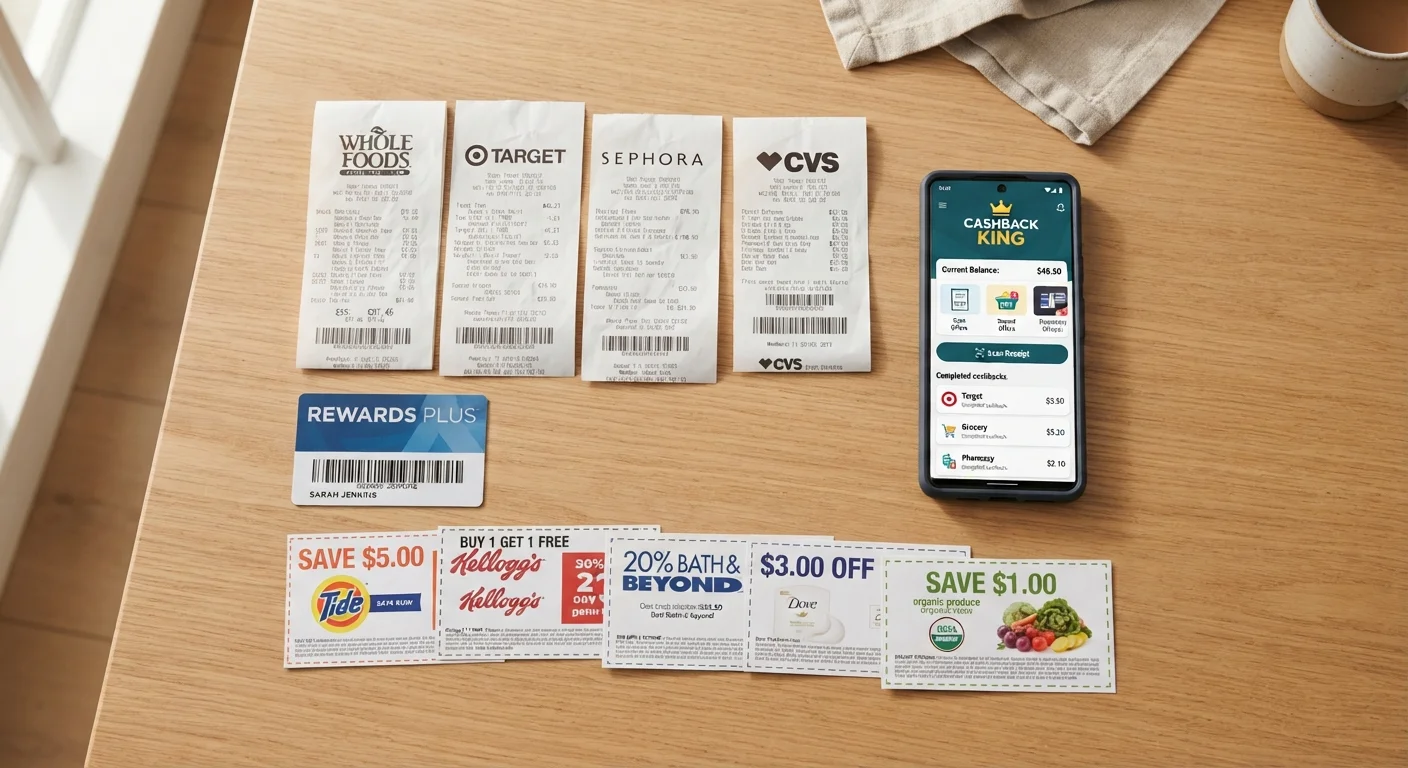
Start by cataloging what's actually on the table. For a given product, discounts typically fall into four categories:
- Sale or clearance price - the markdown already applied by the retailer
- Store coupon - issued by the retailer, applied against their own margin
- Manufacturer coupon - issued by the product maker, reimbursed separately to the retailer
- Cashback - a rebate applied after purchase via a card, app, or portal
Loyalty points fit alongside these layers and can sometimes be redeemed to offset the final price. Write down or screenshot every discount you've found before moving to the next step.
Review the Retailer's Stacking Policy
Retailers decide what combinations they'll honor. Common rules include:
- One promo code per order (blocks two store coupons from stacking)
- Manufacturer coupons accepted alongside store coupons (a common supermarket allowance)
- Sale prices not combinable with certain coupon types
- Loyalty redemptions excluded from already-discounted items
Locate the policy in the retailer's help center or coupon terms section. If it isn't clear, customer service can usually confirm what's permitted. Understanding these boundaries now prevents failed checkouts later. For a broader look at how to evaluate whether a deal is genuinely worthwhile, see what separates real savings from marketing noise.
Sequence Your Discounts Correctly
Order matters. A typical effective sequence looks like this:
- Start with the lowest sale or clearance price
- Apply a store coupon on top
- Layer a manufacturer coupon if permitted
- Use loyalty points if allowed on discounted items
- Activate cashback via your card or app - this step happens at or after purchase and is generally independent of retailer policy
Cashback sits at the end of the chain because it's calculated on what you actually pay, not the original price. A smaller purchase total means a smaller cashback amount, but the net result is still lower than any single discount alone.
Test the Combination in Your Cart Before Finalizing
Add your item, apply discounts one at a time, and confirm the running total updates correctly at each step. Watch for:
- A new code replacing rather than adding to a previous discount
- An error message blocking a combination the policy appeared to allow
- Loyalty redemption fields that disappear once a promo code is entered
If a combination fails, remove the most recently added discount and check whether the policy explicitly prohibits it. Sometimes the issue is a technical limitation rather than a policy rule - contacting customer service before completing your order can resolve it.
Document and Track What Worked
Once you've completed a successful stack, note which discount types combined cleanly at that retailer. Over time this becomes a personal reference that makes future purchases faster. Track:
- Retailer name and channel (online vs. in-store)
- Discount types combined
- Whether loyalty points were stackable
- Cashback rate and platform used
This record also helps if a cashback portal disputes your claim - you'll have evidence of the session and purchase. For building this habit into a low-effort routine, sustainable deal-hunting practices offer practical frameworks.
Common Misconceptions Worth Clearing Up
One widespread assumption is that stacking is always aggressive or borderline-manipulative. In practice, retailers design loyalty programs and accept manufacturer coupons precisely because these mechanisms serve their business interests too - manufacturer coupons are reimbursed, and loyalty programs drive repeat visits. Stacking within published rules isn't a workaround; it's the system functioning as intended.
Another misconception is that digital coupons always outperform paper ones or vice versa. The format is less important than the terms. common couponing beliefs that don't hold up breaks down several of these assumptions in more detail.
Finally, some shoppers believe stacking requires significant time investment. The up-front research is real, but once you understand a particular retailer's rules, subsequent purchases follow the same pattern. Stacking becomes a brief checklist rather than a research project - which is why documenting what works (covered in Step 5) pays dividends over time. The broader principles of smart spending habits reinforce why building repeatable systems matters more than one-off wins.
Stacking Can Backfire at Checkout
Applying incompatible codes or coupons may void all discounts, not just the conflicting one. On some platforms, entering a second promo code automatically removes the first. Test combinations in your cart before completing payment, and keep records of each discount's terms in case you need to escalate a dispute.