

Key Takeaways
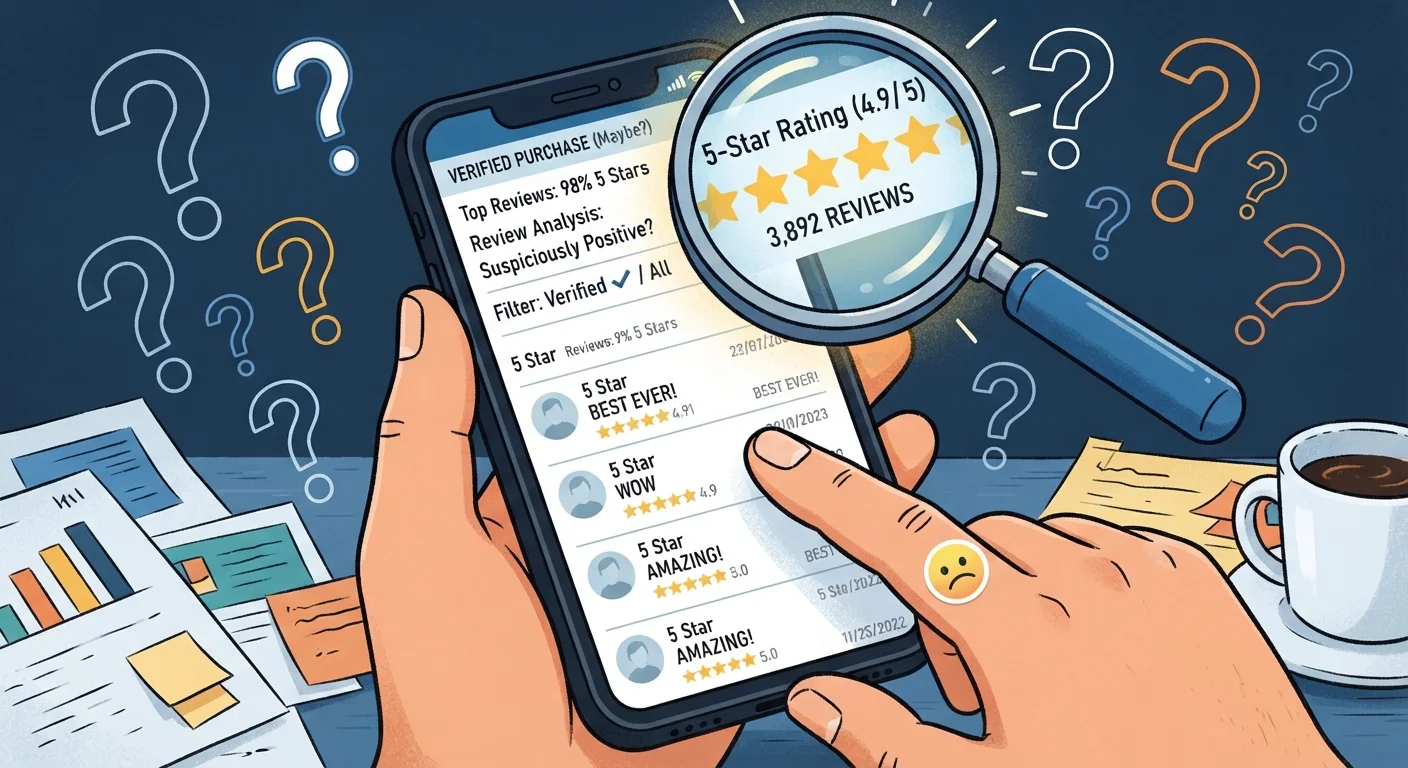
- Clusters of five-star reviews posted within a short window are a reliable manipulation signal.
- Vague, enthusiastic language lacking product-specific detail is a hallmark of fabricated feedback.
- Reviewer profile history exposes patterns that genuine customers almost never create.
- Third-party analysis tools can surface rating manipulation that platform displays obscure.
- Critical one- and two-star reviews often contain the most actionable, unfiltered product information.
What you will need
Why Fake Reviews Are a Real Problem
Online reviews have enormous influence over purchase decisions, and that influence has made them a target. Sellers on competitive marketplaces have financial incentives to manufacture positive feedback - through paid reviewer networks, incentivized review swaps, or bulk-posting schemes. Platforms invest in detection, but the tactics evolve quickly, and no automated filter catches everything.
The result: a rating displayed under a product listing may reflect coordinated promotion as much as genuine customer experience. Knowing how to read behind the number is now a practical consumer skill, not just healthy skepticism. For a broader look at how product pages can mislead, see Reading Product Listings Like a Pro.
Start With the Critical Reviews
When time is short, skip straight to the one- and two-star reviews rather than starting at the top. These are the hardest for sellers to game and almost always contain the most specific information about durability, sizing, quality, or customer service problems. A pattern of similar complaints across multiple low-star reviews is far more reliable than any number of glowing five-star posts.
What to Look For Before You Trust a Rating
Before following the steps below, gather a few things so you can evaluate a product's review profile efficiently.
What you will need
With those in place, work through the steps systematically. Remember that no single signal is definitive - fake review operations have grown sophisticated enough to mimic individual patterns. It's the combination of signals that reveals manipulation.
Once you've vetted a product's reviews, complement that work with the broader pre-purchase habits in Before You Click 'Place Order': A Pre-Purchase Checklist before finalizing any order.
Recognizing Patterns That Platforms Won't Flag for You
Even after running the steps above, some manipulation hides in plain sight. A few additional patterns are worth knowing:
- Review gating: Some sellers only follow up with satisfied customers, suppressing negative feedback before it reaches the platform. A suspiciously high average with almost no three- or four-star reviews can indicate this.
- Translated reviews: Watch for reviews that read slightly off grammatically - they may originate overseas and be machine-translated.
- Product hijacking: A listing may accumulate legitimate reviews for a previous, different item. Check whether early reviews describe the product you're actually buying.
Verified Purchase Labels Have Limits
A 'Verified Purchase' badge confirms that a transaction occurred through the platform - it does not confirm that the review is honest or independent. Sellers can and do provide incentives for verified buyers to leave positive feedback, which may violate platform policy but is difficult to detect from the outside. Treat the badge as a minor positive signal, not a guarantee of authenticity.
Building these habits into every significant purchase pays off over time. The Smarter Online Shopping Habits That Hold Up Over Time guide covers the broader mindset shifts that make you a more resilient shopper. And for the full picture of retail psychology working against you, Retail Tricks That Even Careful Shoppers Fall For is worth a read - fake reviews are just one tactic in a wider playbook covered in the Avoiding Consumer Traps hub.