

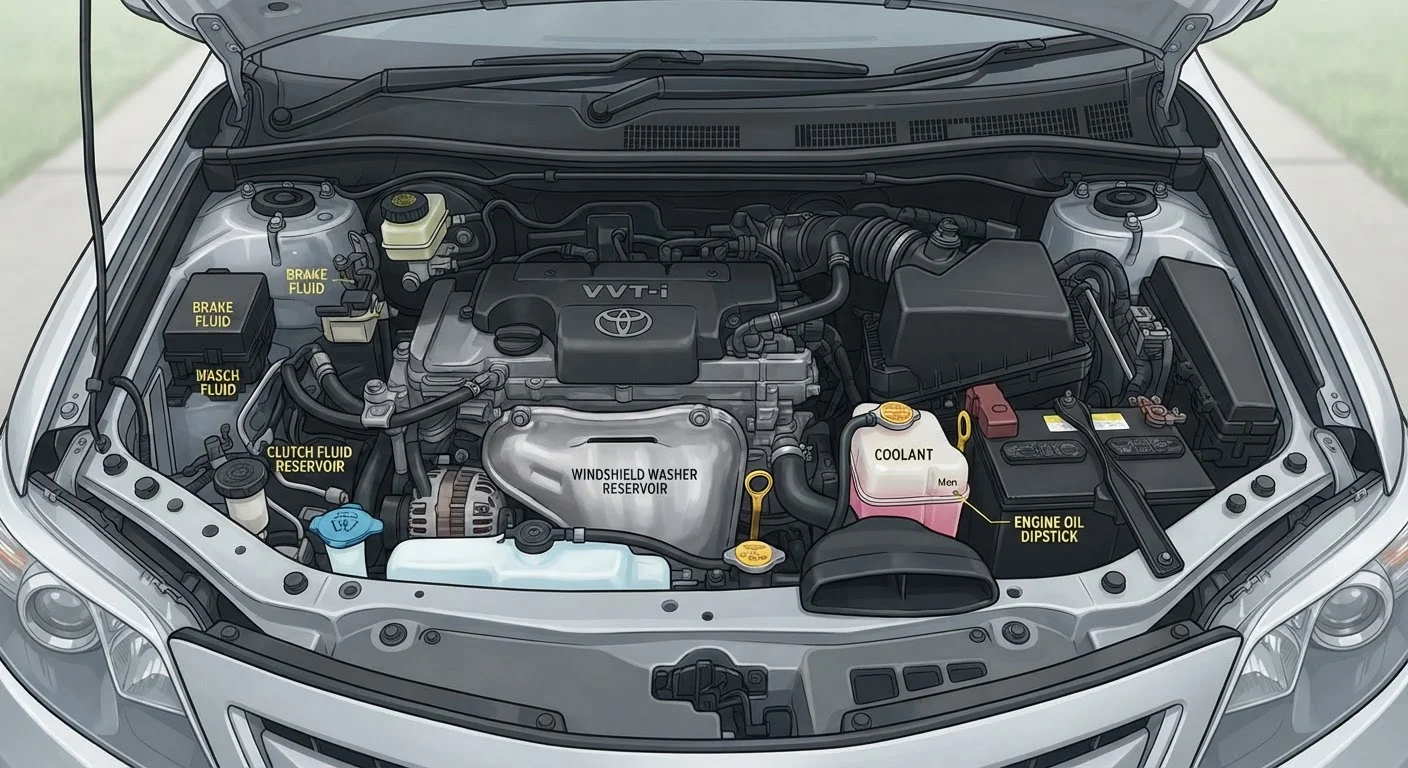
Why Fluid Identification Matters
Most roadside breakdowns and costly engine repairs share a common root cause: a fluid problem that went unnoticed too long. Oil burns off, coolant leaks, brake fluid absorbs moisture - and none of it announces itself loudly until real damage is done. Being able to identify each fluid by location, color, and smell gives you an early-warning system that costs nothing to use.
This reference covers the six fluids every driver should know. Pair it with a quick under-hood check before long trips - see our pre-trip vehicle checklist for a full walk-around routine.
The Six Essential Fluids
Engine Oil
Where it is: Oil filler cap on top of the engine; dipstick nearby (usually a brightly colored loop or handle).
Healthy appearance: Amber to light brown on a clean dipstick.
Warning signs: Black, gritty oil means it's long overdue for a change. A milky or foamy appearance on the dipstick suggests coolant contamination - have a mechanic inspect immediately. Low level on the dipstick means the engine is consuming or leaking oil.
Coolant (Antifreeze)
Where it is: Translucent plastic reservoir near the radiator, marked with MIN and MAX lines.
Healthy appearance: Bright green, orange, pink, or blue depending on formulation - always check your owner's manual for the correct type.
Warning signs: A low level, rust-colored fluid, or oily film on the reservoir cap signals trouble. Never open the radiator cap on a hot engine - pressurized coolant can cause serious burns.
Brake Fluid
Where it is: Small plastic reservoir on the brake master cylinder, usually near the firewall on the driver's side.
Healthy appearance: Nearly clear to very light yellow.
Warning signs: Dark brown fluid has absorbed too much moisture and has reduced boiling resistance. A low level in the reservoir can mean worn brake pads or a leak - either warrants prompt attention. If a brake warning light comes on, check the reservoir level first.
Power Steering Fluid
Where it is: Reservoir with a steering wheel icon on the cap, typically on one side of the engine bay. Many newer vehicles use electric power steering and have no fluid reservoir.
Healthy appearance: Clear to light amber or pink.
Warning signs: Dark brown fluid, whining when turning, or a low level all suggest the system needs attention.
Transmission Fluid
Where it is: Some vehicles have a dipstick near the back of the engine bay (automatic transmissions); many modern cars require a shop inspection since there is no user-accessible dipstick.
Healthy appearance: Bright red to pink when new.
Warning signs: Dark brown or burnt-smelling fluid needs replacement. A slipping sensation when accelerating can also indicate low or degraded fluid.
Windshield Washer Fluid
Where it is: Largest reservoir in the engine bay, usually marked with a windshield or spray icon.
Healthy appearance: Blue, green, or orange - any pre-mixed washer fluid color is fine.
Warning signs: Never substitute water, especially in freezing climates. Plain water can freeze in the reservoir and damage the pump.
What a Leak on the Ground Tells You
Fluid puddles under a parked car are one of the fastest diagnostic clues available. Use these general patterns as a starting point - always confirm with a qualified mechanic before assuming the cause:
- Clear water: Usually normal condensation from the air conditioning system.
- Light yellow to clear, slippery: Could be brake fluid; press the brake pedal to test firmness. If it feels soft, do not drive - call a mechanic.
- Bright green, orange, or pink, sweet smell: Likely coolant. Keep the engine cool and check the reservoir level.
- Brown to black, oily: Engine oil leak. Check the dipstick and have the source identified soon.
- Red, slightly oily: Transmission or power steering fluid.
Consistent leaks of any kind should be inspected by a professional. Some fluids - particularly brake fluid - create safety risks that make driving inadvisable until the source is found and repaired. For a broader seasonal maintenance approach, see our seasonal car care checklist.