

Key Takeaways
- Cool-season grasses peak in spring and fall; warm-season grasses peak in summer.
- Your USDA hardiness zone and local climate determine which type will thrive with least effort.
- Planting the wrong grass type leads to chronic stress, higher water bills, and repeated reseeding.
- The transition zone (roughly Kentucky to Northern California) can support both types with trade-offs.
- Timing fertilization and aeration to your grass type's active growth cycle dramatically improves results.
Option A
Cool-Season Grasses
The cold-hardy choice for northern and transitional climates.
Best for: Homeowners in the northern U.S. who need a lawn that stays green through spring and fall and can handle freezing winters.
Option B
Warm-Season Grasses
The heat-tolerant option built for southern summers.
Best for: Homeowners in the southern U.S. who need a lawn that thrives through hot, humid summers and resists drought stress.
If you live in the northern U.S. with cold winters and mild summers
Cool-Season Grasses
Varieties like tall fescue and Kentucky bluegrass are naturally adapted to freeze-thaw cycles and will green up reliably each spring without excessive inputs.
If you live in the Deep South or Gulf Coast region
Warm-Season Grasses
Bermudagrass, zoysiagrass, and St. Augustinegrass handle intense heat and humidity that would quickly exhaust cool-season varieties.
If water conservation is your top priority
Warm-Season Grasses
Most warm-season species go dormant rather than die during drought, reducing the need for supplemental irrigation during dry summers.
If you want a lawn that stays visibly green in October and March
Cool-Season Grasses
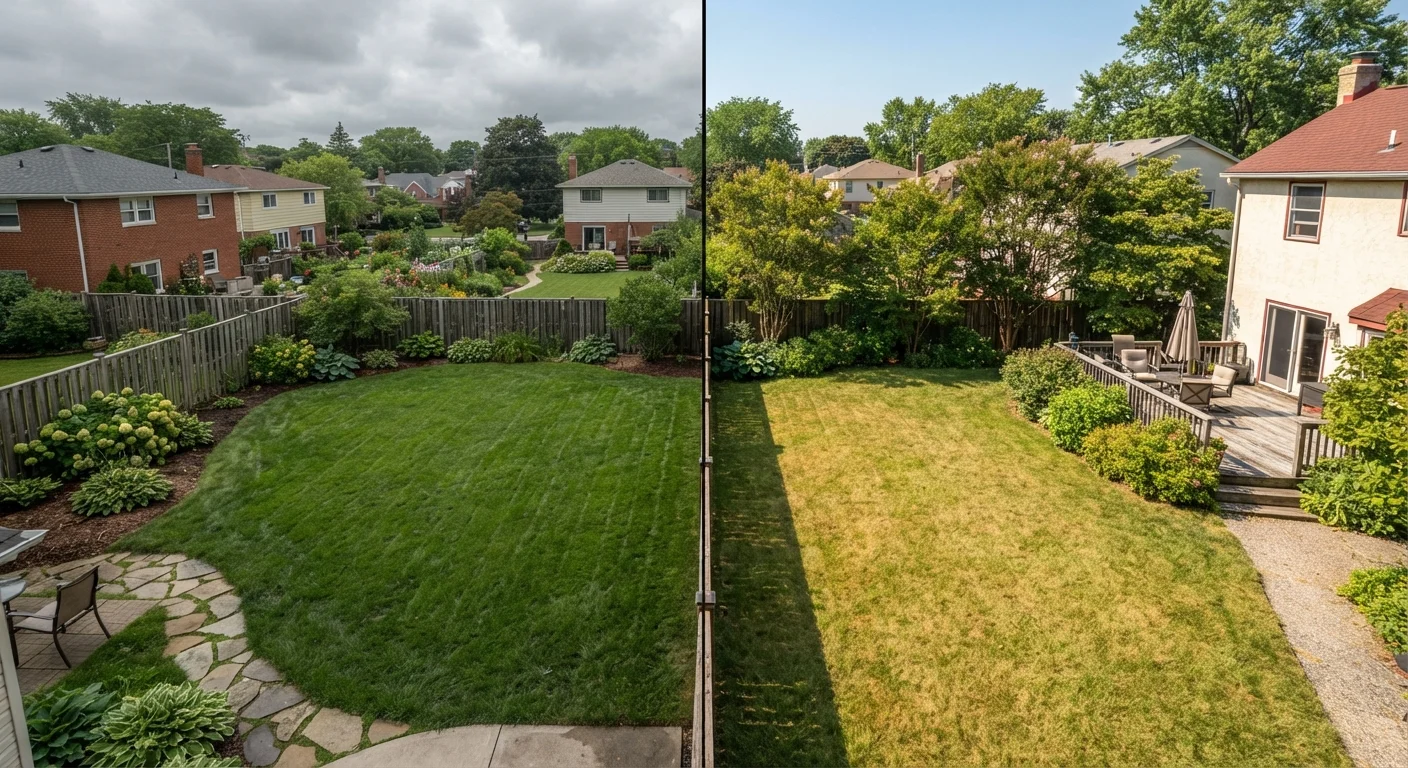
Cool-season grasses remain actively green during shoulder seasons when warm-season lawns are dormant and straw-colored.
If you live in the transition zone and want year-round color
Cool-Season Grasses
Overseeding a warm-season lawn with annual ryegrass in fall is a common transition-zone strategy, but for a single grass type, tall fescue adapts most broadly across that middle band.
What Separates These Two Grass Categories
The fundamental difference between cool-season and warm-season grasses comes down to their optimal growing temperature. Cool-season grasses - including Kentucky bluegrass, tall fescue, fine fescue, and perennial ryegrass - grow most vigorously when soil temperatures sit between 50°F and 65°F. That typically means strong growth in spring and again in fall across the northern United States.
Warm-season grasses - including bermudagrass, zoysiagrass, St. Augustinegrass, centipedegrass, and buffalograss - hit their stride when soil temperatures reach 70°F to 90°F. They flourish through summer in the South, then go dormant and turn tan when temperatures drop below about 50°F in late fall.
Neither category is inherently better. The one that requires the least intervention in your yard is the one suited to your regional climate. Planting against your climate almost always means higher water usage, more fertilizer, persistent disease pressure, and a lawn that never quite looks right.
| Criterion | Cool-Season Grasses | Warm-Season Grasses |
|---|---|---|
| Optimal soil temp | 50°F - 65°F | 70°F - 90°F |
| Peak growth period | Spring and fall | Late spring through summer |
| Winter appearance | Green (if not frozen) | Dormant/tan below ~50°F |
| Drought tolerance | Moderate; needs irrigation | High; dormancy as defense |
| Best U.S. region | North, Pacific Northwest | South, Gulf Coast, Southwest |
| Common species | Tall fescue, bluegrass, ryegrass | Bermuda, zoysia, St. Augustine |
| Seeding season | Late summer to early fall | Late spring |
| Shade tolerance | Moderate (fine fescues best) | Low to moderate |
Climate Zones and Grass Selection
The U.S. is broadly divided into three lawn climate regions. The northern zone (upper Midwest, New England, Pacific Northwest) is cool-season territory. The southern zone (Southeast, Gulf Coast, Southwest desert areas) is warm-season territory. The transition zone - a band running roughly from Northern California through Kansas, Missouri, Kentucky, and into Virginia - is the most challenging, because neither type is perfectly adapted.
In the transition zone, tall fescue is often the most reliable single-species choice because it tolerates both moderate cold and moderate heat better than most alternatives. Some homeowners in this zone overseed warm-season lawns with cool-season ryegrass in fall to maintain color through winter, though this adds management complexity and cost. If you're thinking through your transition-zone strategy, our guide on lawn maintenance costs and alternatives can help you weigh what level of year-round appearance is worth the effort.
~1,000
Gallons of water per square foot annually saved
Research from university extension programs suggests drought-tolerant warm-season grasses can use significantly less supplemental water than cool-season lawns in hot climates.
45°F
Soil temp threshold for cool-season seed germination
Most university turfgrass extension sources cite soil temperatures below 45°F as too cold for reliable cool-season grass seed germination.
~40M acres
Estimated U.S. lawn coverage
NASA-funded researchers have estimated turfgrass covers roughly 40 million acres in the contiguous United States, making it the largest irrigated crop by area.
Maintenance Timing: Where Most Homeowners Go Wrong
One of the most common - and costly - lawn mistakes is fertilizing and aerating on the wrong schedule for your grass type. Each type should be fed and aerated during its active growth period, not on a generic calendar.
- Cool-season grasses: Fertilize primarily in early fall (September-October), with a lighter application in early spring. Aerate in late summer or early fall when the grass is actively growing and can recover quickly.
- Warm-season grasses: Fertilize from late spring through midsummer. Aerate in late spring or early summer, once the lawn has fully greened up and is growing vigorously.
Applying nitrogen fertilizer to a warm-season lawn in early spring before it breaks dormancy is a common error that feeds weeds while the grass isn't yet ready to compete. Similarly, fertilizing cool-season grass heavily in midsummer promotes disease and root stress. For a deeper look at aeration timing, see our aeration guide.
Seeding and overseeding follow the same principle. Cool-season grasses establish best from seed in late summer to early fall. Warm-season grasses establish best in late spring. If you're preparing your cool-season lawn after a rough winter, our spring lawn prep checklist walks through the right order of tasks to avoid wasted effort.
Drought Tolerance, Shade, and Wear Resistance
Beyond temperature, three secondary factors often tip the decision: drought tolerance, shade performance, and foot traffic resilience.
Drought tolerance: Most warm-season grasses handle extended dry periods better than cool-season varieties. Bermudagrass and buffalograss in particular can go dormant under drought and recover when rain returns, rather than dying outright. Cool-season grasses typically need supplemental irrigation during summer heat to avoid dormancy or damage.
Shade tolerance: Neither group excels in deep shade, but fine fescues (a cool-season type) offer the best shade performance of any common turf grass. Among warm-season options, St. Augustinegrass handles partial shade reasonably well. Bermudagrass and buffalograss require full sun.
Foot traffic: Bermudagrass and zoysiagrass are among the most wear-resistant grasses available, making them popular for high-traffic areas and sports fields in warm climates. Kentucky bluegrass has good recuperative ability in cool climates due to its spreading rhizomes, though it struggles in heavy shade or compacted soil.
For homeowners questioning whether a traditional lawn is the right investment at all, it's worth exploring how native plants compare to conventional turf as a lower-input alternative for portions of your yard.
The Transition Zone Requires Extra Realism
If you live in the transition zone, no single grass type will look perfect year-round without significant effort. Tall fescue is a practical compromise, but it can thin in extreme heat and may need overseeding each fall. Setting realistic expectations - rather than chasing a flawless lawn against your climate - saves money and frustration in the long run.