
The Hidden Costs of a Perfectly Manicured Lawn - and Lower-Maintenance Alternatives

Key Takeaways
- Traditional lawn maintenance can cost homeowners $1,000-$3,000 or more annually when all inputs are tallied.
- Water, fertilizer, pesticides, and equipment upkeep are the four largest hidden cost drivers.
- Alternatives like native groundcovers, clover lawns, and mulched beds can dramatically reduce ongoing labor and expense.
- Switching grass varieties suited to your climate reduces irrigation and fertilizer needs without sacrificing appearance.
- Partial lawn replacement - not full removal - is a practical middle ground for most homeowners.
Provides durable, usable outdoor living space
Grass absorbs impact and stays comfortable underfoot, making it the most practical surface for children's play, pets, and outdoor gatherings.
Supports strong curb appeal and property presentation
A well-maintained lawn signals upkeep to neighbors and prospective buyers, and remains a broadly accepted aesthetic standard in most American neighborhoods.
Cools the surrounding microclimate naturally
Turfgrass transpires moisture and reflects less heat than hardscape, measurably reducing surface temperatures near the home during summer months.
Provides erosion control on sloped properties
Dense grass root systems bind soil effectively, reducing runoff and protecting foundations and drainage infrastructure on grades where bare ground would erode.
High and recurring annual water consumption
Conventional turfgrass is among the thirstiest landscape options, and irrigation costs can represent several hundred dollars per season in moderate climates - significantly more in arid regions.
Requires regular chemical inputs to perform
Maintaining the dense, weed-free appearance of a traditional lawn typically requires repeated fertilizer applications, herbicide treatments, and often pesticide use - all of which add cost and environmental load.
Significant time commitment for mowing and edging
A typical suburban lawn requires mowing every 5-10 days during the growing season, plus edging, blowing, and seasonal tasks that can consume dozens of hours annually.
Equipment costs and maintenance are ongoing
Mowers, edgers, and spreaders require fuel or electricity, routine service, and eventual replacement - costs that are easy to undercount when budgeting for lawn care.
Offers limited ecological value compared to alternatives
Monoculture turfgrass supports little wildlife habitat or pollinator activity compared to native plantings, and synthetic inputs can degrade local soil biology over time.
Our Verdict
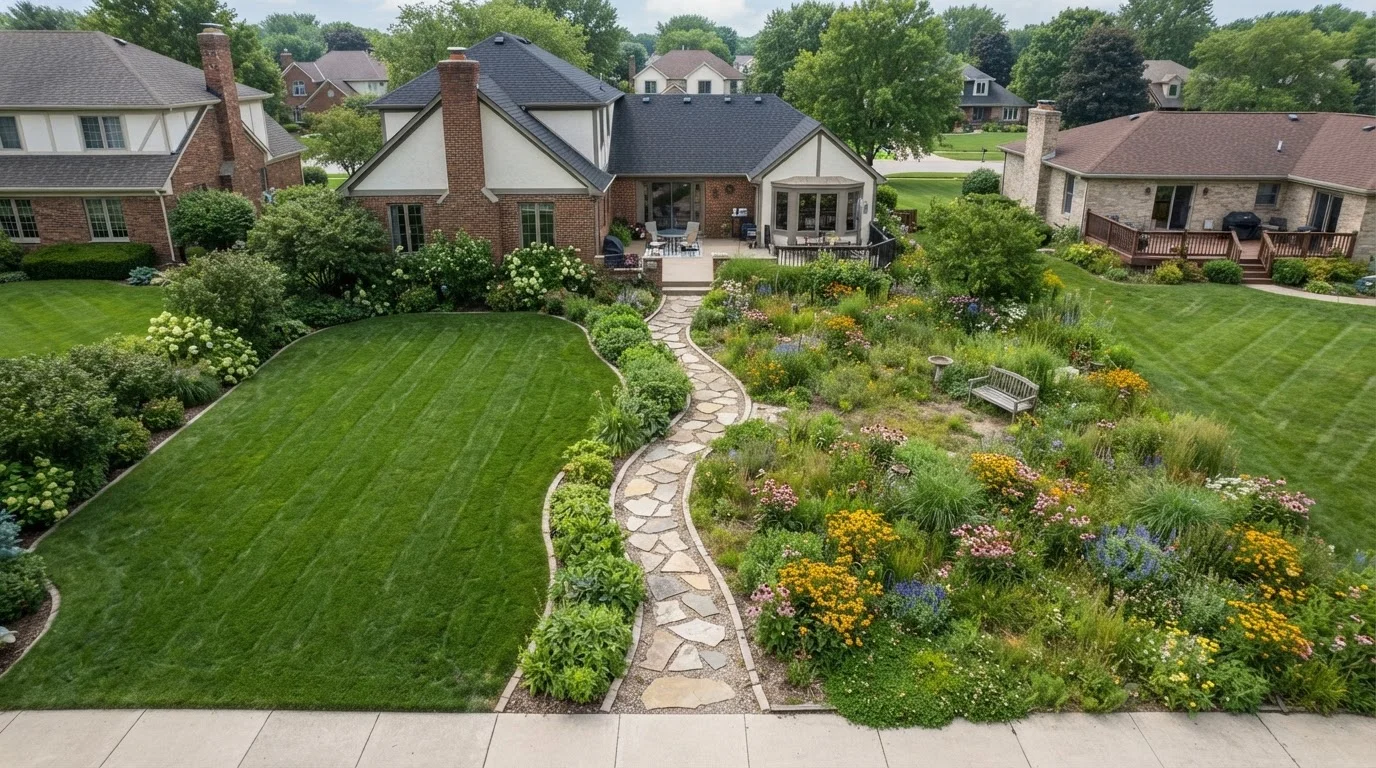
A conventionally manicured lawn delivers real curb appeal and usable outdoor space, but its true cost in water, chemicals, equipment, and time is routinely underestimated. For most homeowners, a hybrid approach - maintaining grass in high-use zones while replacing low-traffic areas with native plants, clover, or mulched beds - offers the best balance of aesthetics, functionality, and savings.
Homeowners willing to rethink the all-grass yard in favor of a lower-input landscape that still looks intentional and well-kept.
What a Manicured Lawn Actually Costs Each Year
Most homeowners think of lawn care in terms of a monthly lawn service bill or a bag of fertilizer picked up at the hardware store. But the real annual price tag emerges only when every input is counted together.
Water is typically the single largest hidden cost. Turfgrass - particularly in warm, dry climates - can require 1 to 1.5 inches of water per week during the growing season. Depending on your local water rates and yard size, irrigation alone can add several hundred dollars to annual utility bills. In drought-prone states, some municipalities also charge tiered rates that escalate sharply with heavy use.
Fertilizer, weed control products, and grub or pest treatments represent another significant recurring outlay. A standard four-step fertilizer program for a mid-sized lawn typically runs $150-$400 per year in materials alone - more if you hire a lawn care service. Pesticide and herbicide costs layer on top of that.
Equipment is easy to overlook because the purchases feel one-time, but mowers require blade sharpening, oil changes, air filter replacements, and eventual engine repair. A gas mower's maintenance and fuel can add $100-$200 per season, and the mower itself depreciates toward replacement every 8-12 years.
$500+
Average annual household spending on lawn and garden services
The American National Gardening Association has reported that U.S. households collectively spend billions annually on lawn care, with individual household averages exceeding $500 in services alone.
30-60%
Share of residential water use devoted to irrigation
The U.S. Environmental Protection Agency estimates that landscape irrigation accounts for nearly one-third of all residential water use nationwide, and up to 60% in arid western states.
For homeowners who contract out mowing, edging, and seasonal treatments, the American National Gardening Association has estimated that U.S. households spend an average of over $500 annually on lawn and garden services - and for professionally maintained suburban properties, total costs including materials and labor can easily reach $2,000-$3,000 per year. That's a figure worth weighing critically. As our piece on home maintenance myths explains, many homeowners absorb recurring costs without questioning whether the return justifies the expense.
Pros and Cons of Keeping a Traditional Lawn
Before rethinking your yard, it's worth being clear-eyed about what a conventional grass lawn genuinely offers - and where it consistently falls short.
Provides durable, usable outdoor living space
Grass absorbs impact and stays comfortable underfoot, making it the most practical surface for children's play, pets, and outdoor gatherings.
Supports strong curb appeal and property presentation
A well-maintained lawn signals upkeep to neighbors and prospective buyers, and remains a broadly accepted aesthetic standard in most American neighborhoods.
Cools the surrounding microclimate naturally
Turfgrass transpires moisture and reflects less heat than hardscape, measurably reducing surface temperatures near the home during summer months.
Provides erosion control on sloped properties
Dense grass root systems bind soil effectively, reducing runoff and protecting foundations and drainage infrastructure on grades where bare ground would erode.
High and recurring annual water consumption
Conventional turfgrass is among the thirstiest landscape options, and irrigation costs can represent several hundred dollars per season in moderate climates - significantly more in arid regions.
Requires regular chemical inputs to perform
Maintaining the dense, weed-free appearance of a traditional lawn typically requires repeated fertilizer applications, herbicide treatments, and often pesticide use - all of which add cost and environmental load.
Significant time commitment for mowing and edging
A typical suburban lawn requires mowing every 5-10 days during the growing season, plus edging, blowing, and seasonal tasks that can consume dozens of hours annually.
Equipment costs and maintenance are ongoing
Mowers, edgers, and spreaders require fuel or electricity, routine service, and eventual replacement - costs that are easy to undercount when budgeting for lawn care.
Offers limited ecological value compared to alternatives
Monoculture turfgrass supports little wildlife habitat or pollinator activity compared to native plantings, and synthetic inputs can degrade local soil biology over time.
The environmental footprint of traditional turf is also worth naming explicitly. Frequent mowing contributes to air and noise pollution (gas-powered mowers are notably inefficient engines), and synthetic fertilizer runoff is a documented contributor to water quality problems in streams and lakes. Overwatering compacted soil also leads to runoff rather than absorption, compounding both waste and cost.
If you're committed to keeping grass, choosing the right grass variety for your climate is one of the highest-leverage decisions you can make. A well-matched grass type naturally requires less supplemental water and fertilizer, reducing inputs without changing your basic approach.
Lower-Maintenance Alternatives Worth Considering
Replacing all or part of your lawn doesn't have to mean sacrificing a tidy, attractive yard. Several alternatives have gained traction among homeowners looking to reduce time and expense without letting their property look neglected.
Clover Lawns
White clover (Trifolium repens) was a standard component of American lawn seed mixes until the 1950s, when broadleaf herbicides made it a casualty of weed control programs. It's now experiencing a well-deserved revival. Clover fixes its own nitrogen from the air, meaning it needs little to no fertilizer, stays green during mild droughts, and tolerates foot traffic reasonably well. It costs considerably less to establish than turfgrass sod.
Native Groundcovers and Plants
Native plants are adapted to local rainfall patterns and soil conditions, which means established plantings typically require minimal irrigation and no synthetic fertilizer. Ground-hugging natives like creeping thyme, buffalo grass (in appropriate climates), or Pennsylvania sedge can replace turf in low-traffic zones. For a deeper look at this approach, see our guide to native plants and why landscapers are rethinking exotics.
Mulched Garden Beds
Converting low-traffic lawn areas into mulched planting beds suppresses weeds, retains soil moisture, and eliminates mowing in those zones entirely. Done correctly, a mulched bed requires far less annual maintenance than the same square footage in grass. Our article on mulch depth, timing, and placement covers the technique details that make the difference between a bed that thrives and one that creates new problems.
Check HOA Rules Before Converting
Some homeowner associations have rules governing lawn appearance, plant height, or permitted groundcovers. Before removing grass or installing a clover or native plant lawn, review your HOA covenants and, if needed, submit a variance request. Many associations have updated their guidelines in recent years to accommodate water-wise landscaping, but it's essential to verify your specific requirements before starting work.
Hardscape Zones
Patios, gravel paths, and permeable pavers eliminate maintenance in specific areas entirely. These have higher upfront costs but near-zero ongoing inputs. They work best paired with planted areas rather than as a wholesale lawn replacement.
A Practical Path Forward: Start with a Partial Replacement
Full lawn removal is rarely necessary - or practical - for most homeowners. A more achievable strategy is identifying which parts of your yard are high-use (play areas, pet runs, entertaining space) versus low-traffic (side yards, shaded strips, areas beneath trees), then targeting the low-traffic zones for conversion first.
Starting with a single 100-200 square foot section allows you to test a groundcover or planting approach without committing your entire yard. Track your watering and maintenance time before and after, and scale what works.
If you do keep grass, investing in lawn aeration where soil compaction is a problem, and following a seasonal lawn care calendar, can significantly reduce the inputs needed to keep it healthy. A lawn that's properly aerated and fed on schedule doesn't need compensatory over-watering or heavy chemical treatment to stay green.
The goal isn't a yard that looks effortless - it's a yard whose effort and cost are genuinely proportionate to the value it delivers for your household.