
Native Plants in the Backyard: What They Are and Why Landscapers Are Rethinking Exotics

Key Takeaways
- Native plants evolved alongside local wildlife, making them more ecologically compatible than most imported ornamentals.
- Established native plantings typically require less watering, fertilizing, and pest control than conventional landscapes.
- Not all native plants are low-maintenance immediately - establishment can take one to three growing seasons.
- Mixing natives and non-invasive ornamentals is a common and practical approach for most homeowners.
- Local cooperative extension offices are the most reliable resource for region-specific native plant lists.
Native Plants
Native plants are species that evolved naturally in a specific region over thousands of years without human introduction. Because they developed alongside local soils, rainfall patterns, insects, and wildlife, they are inherently adapted to those conditions. This means they generally require less supplemental water, fertilizer, and pest management than exotic ornamentals imported from other climates or continents.
Ecologists define a plant as native based on its presence in a region prior to European colonization of North America - a benchmark commonly used by extension services and conservation organizations.
What Separates a Native Plant from an Exotic
The distinction between native and exotic (also called non-native or introduced) plants comes down to origin and evolutionary history. A plant native to the Mid-Atlantic region, for example, developed alongside the region's soil chemistry, seasonal rainfall, temperature swings, and the insects and birds that feed on it. An ornamental imported from Japan or the Mediterranean had no such relationship - it simply arrived and was cultivated because it looked appealing or grew reliably.
This matters more than it might seem. Plants and their local ecosystems co-evolve over millennia. Native insects, for instance, often can only feed on a narrow range of plant species. Research by entomologist Doug Tallamy has documented that oaks native to the eastern U.S. support hundreds of caterpillar species, while many popular ornamental trees support very few. That gap ripples through the food chain, affecting birds and other wildlife that depend on insects.
Exotic plants are not automatically problematic. Many imported ornamentals are non-invasive and grow peacefully in American yards without ecological harm. The concern arises specifically with invasive species - non-natives that spread aggressively, outcompete local vegetation, and degrade habitat. English ivy, Japanese barberry, and Bradford pear are common examples of plants still sold in some nurseries that are invasive across wide portions of the U.S.
The Practical Case for Going Native
Landscapers and homeowners are rethinking exotic-heavy plantings for reasons that go beyond ecology - the maintenance math often favors natives once they are established.
30-60%
Of household water used by outdoor landscaping in summer
According to the U.S. Environmental Protection Agency, outdoor irrigation accounts for a significant share of home water consumption, much of it applied to non-native turf and ornamentals.
500+
Caterpillar species supported by native oaks
Research by entomologist Doug Tallamy found that native oak species in the eastern U.S. host far more native insect species than most imported ornamental trees.
1-3 seasons
Typical establishment time for most native plants
Extension services generally advise that native perennials and shrubs require one to three growing seasons to develop mature root systems and achieve drought tolerance.
Conventional landscape plantings frequently require regular irrigation, synthetic fertilizer applications, and fungicide or pesticide treatments to compensate for the fact that they are growing outside their native range. Native plants, by contrast, evolved for local conditions and often need none of those inputs after their first few seasons in the ground.
Water use is where the savings become most tangible. A traditional lawn and ornamental landscape can account for 30-60% of a household's total water use during summer months, according to the U.S. Environmental Protection Agency. Native groundcovers, grasses, and shrubs often survive on natural rainfall alone once established, which can meaningfully reduce water bills - particularly in drought-prone regions. For a broader look at how conventional lawn care costs add up, see The Hidden Costs of a Perfectly Manicured Lawn.
Soil compatibility is another driver. Natives are adapted to local soil pH, drainage, and nutrient levels, meaning they generally do not need the soil amendments that many exotic species require.
Focus on the establishment year
The most common reason native plantings fail is underwatering during the first growing season. Even drought-tolerant natives need consistent moisture while they develop root systems. Plan to water new plantings deeply once or twice a week during dry spells in year one, then gradually reduce as plants mature.
The Real Trade-Offs Worth Knowing
The case for native plants is strong, but an honest assessment includes the complications.
- Establishment period: Native plants are not instant landscapes. Most need one to three growing seasons to develop the deep root systems that make them drought-tolerant. During this window, regular watering is still necessary - skipping it can kill plants before they have a chance to prove themselves.
- Sourcing challenges: Not every garden center stocks a wide native plant selection, and some plants sold as natives are cultivars (cultivated varieties) that may have reduced ecological value compared to true straight-species plants. Buying from reputable native plant nurseries or native plant society sales improves your chances.
- Regional specificity: Native to where matters enormously. A plant native to Texas prairies is not adapted to the Pacific Northwest, and vice versa. Your regional plant palette will look different from what you see on gardening blogs based elsewhere.
- Aesthetic expectations: Native plantings can look less manicured than conventional landscapes, especially during winter or the establishment phase. Some HOAs have restrictions that may conflict with naturalistic designs - worth checking before planting.
The grass question deserves special mention. Turf lawns are typically dominated by non-native species, and switching entirely to native groundcovers is a big commitment. A more incremental approach - replacing lawn sections with native plantings over time - is how most homeowners make the transition workable. See our comparison of cool- and warm-season grass varieties if turf is still part of your plan.
How to Start Without Overhauling Your Entire Yard
You do not need to rip out every shrub to move toward a more native-friendly landscape. A targeted, phased approach tends to work better both practically and financially.
- Identify problem plants first. Check your current plantings against your state's invasive species list. Removing confirmed invasives is the highest-priority first step, since they actively harm local ecosystems.
- Find your regional native palette. Your state cooperative extension service publishes plant lists appropriate to your county or growing zone. Native plant societies often host annual sales where locally sourced plants are available at reasonable prices.
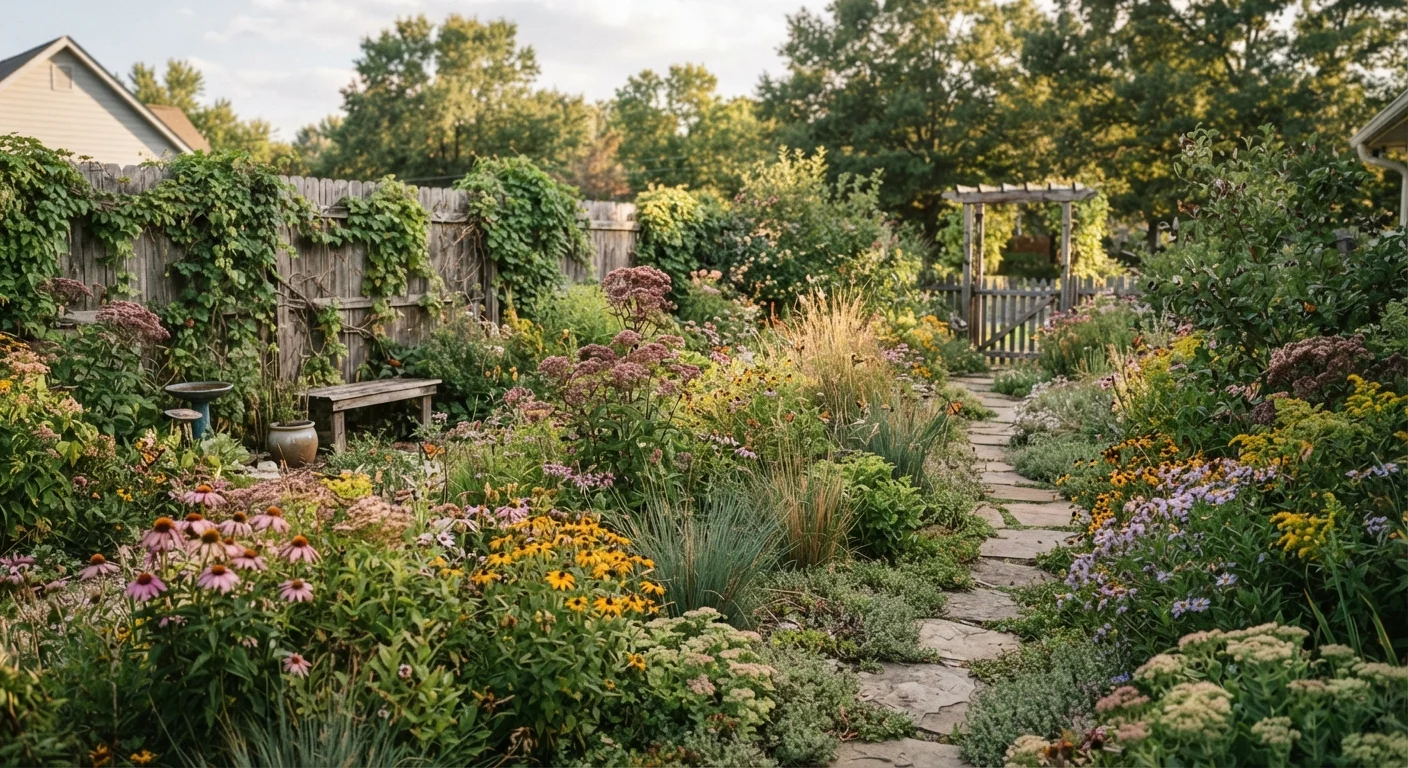
- Start with high-impact, easy-to-grow species. Plants like coneflowers (Echinacea), native asters, switchgrass, and black-eyed Susans are widely adaptable, visually appealing, and forgiving. They provide quick wins while you plan larger changes.
- Replace lawn edges and problem areas first. Areas where grass struggles - under trees, along fences, on slopes - are natural candidates for native groundcovers or shrubs, and replacing them there reduces maintenance without requiring a full lawn overhaul.
For gardeners weighing how to structure planting areas, our guide on raised beds versus in-ground planting covers how soil and space considerations shape that decision. And when you do water during the establishment phase, common watering myths are worth reading to avoid accidental harm to new plantings.
HOA and local ordinance considerations
Some homeowners associations and municipalities have bylaws governing 'natural' or unmowed landscaping. Before installing a native meadow or reducing lawn area significantly, check your HOA covenants and any relevant local ordinances. Many areas have updated their rules to accommodate native plantings, but it's worth confirming before you plant.