

Key Takeaways
- Raised beds offer better drainage, soil control, and accessibility but cost more upfront to build.
- In-ground planting is lower-cost to start and supports deep-rooted crops, but requires workable native soil.
- Poor native soil-compacted clay or sandy-favors raised beds; rich, loamy soil makes in-ground planting more practical.
- Raised beds tend to warm faster in spring, extending your growing season in cooler climates.
- Long-term productivity in either system depends heavily on consistent soil amendment and watering practices.
Our Verdict
Neither approach is universally superior. Raised beds solve specific problems-poor soil, drainage issues, physical accessibility-while in-ground planting remains a practical, cost-effective choice when native soil is healthy and space is ample. Most gardeners find that a combination of both, matched to their crops and site conditions, delivers the best results.
| Best for | Recommended |
|---|---|
| Gardeners with poor, compacted, or contaminated native soil | Raised Beds |
| Those prioritizing low startup costs and large planting areas | In-Ground Planting |
| Gardeners with mobility limitations or back and knee issues | Raised Beds |
| Growing deep-rooted crops like corn, squash, or asparagus at scale | In-Ground Planting |
The Core Trade-Off: Control vs. Cost
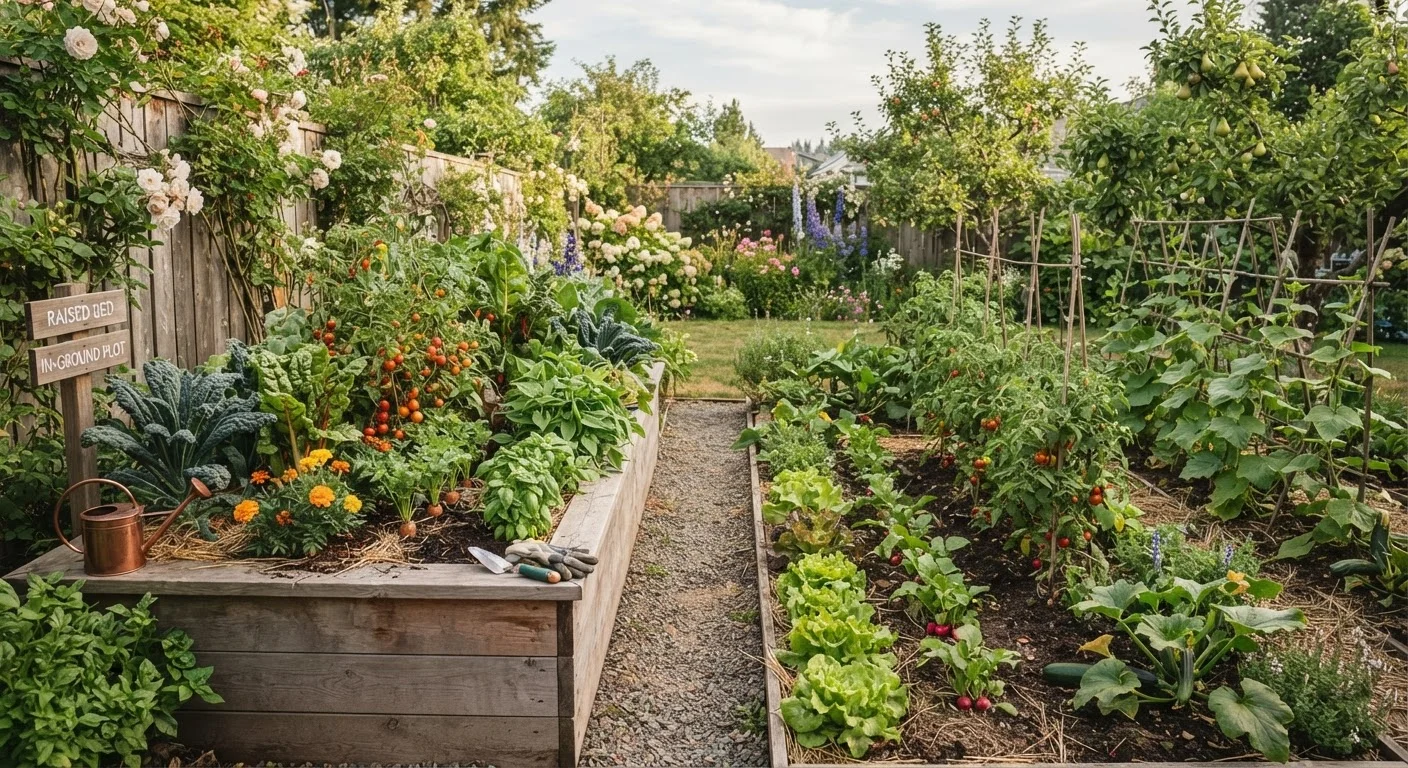
Raised beds and in-ground gardens aren't competing philosophies so much as different tools for different situations. The fundamental trade-off is straightforward: raised beds give you greater control over soil quality, drainage, and growing conditions, but that control comes with meaningful upfront cost and effort. In-ground planting relies on what's already underfoot, which is either an asset or a liability depending on your yard.
Before choosing, it helps to honestly assess two things: the quality of your existing soil and your budget for getting started. Everything else-drainage, weed pressure, season length-follows from those two variables.
| Raised Beds | In-Ground Planting | |
|---|---|---|
| Startup Cost | Moderate to high ($150-$400+ per bed) | Low (amendments only) |
| Soil Control | Full control - bring in custom mix | Limited - work with native soil |
| Drainage | Excellent; drains freely | Varies by native soil type |
| Season Length | Warms faster; longer season | Slower to warm in spring |
| Weed Pressure | Lower initially, increases over time | Higher from existing seed bank |
| Water Retention | Dries out faster; needs more frequent watering | Retains moisture longer |
| Deep-Root Crops | Can be limiting in shallow beds | Unrestricted root depth |
| Accessibility | Easier for those with mobility limits | Requires bending or kneeling |
Where Raised Beds Genuinely Excel
Raised beds shine in situations where native soil works against you. If your yard has dense clay that drains poorly, sandy soil that holds almost no nutrients, or soil that may contain contaminants from old paint or fill material, building up above grade lets you start fresh with a known growing medium.
Drainage is the most underrated advantage. Because raised bed soil stays loose and uncompacted (no foot traffic on the growing area), water moves through it consistently-reducing the root rot and waterlogging issues common in heavy clay yards. That same loose structure warms faster in early spring, which can add two to four weeks to your effective growing season in USDA hardiness zones 5 and below.
Weed pressure is also lower in the first few years. Filling a bed with clean soil mix dramatically reduces the seed bank that fuels weed germination. However, wind-blown seeds and opportunistic perennials will colonize any open bed over time-so raised beds reduce rather than eliminate weeding. See our guide to mulching technique for strategies that suppress weeds in both systems.
Test Your Native Soil Before Deciding
A basic soil test-available through most cooperative extension services for $15-$30-gives you pH, nutrient levels, and sometimes texture analysis. If results show heavily compacted, nutrient-depleted, or contaminated soil, that data alone often makes the case for raised beds more clearly than any general guideline. Many extensions also provide amendment recommendations alongside the results, saving you guesswork.
The Case for In-Ground Planting
In-ground planting makes the most sense when you're working with already-decent soil-loamy, reasonably well-drained, and without significant contamination concerns. In that situation, you're leveraging a free resource rather than paying to replicate it.
Cost is the clearest argument. A 4-by-8-foot raised bed filled with a quality soil mix can cost $150-$400 depending on materials, before you've planted a single seed. Scaling that across a meaningful vegetable garden becomes expensive quickly. In-ground beds require only soil amendments-compost, organic matter, perhaps lime or sulfur to adjust pH-which are a fraction of that cost.
Deep-rooted crops also perform better in-ground. Crops like winter squash, asparagus, sweet corn, and indeterminate tomatoes develop extensive root systems that benefit from the unrestricted depth and volume of native soil. A 10-12-inch raised bed can feel limiting once these plants hit their stride mid-summer. How you feed that soil matters significantly; our comparison of organic vs. synthetic fertilizers can help you choose an amendment approach that builds long-term soil health rather than just feeding this season's crop.
Watering, Maintenance, and Long-Term Costs
Raised beds dry out faster than in-ground plots. The same drainage that prevents waterlogging also means raised beds lose moisture more quickly in hot, dry weather-particularly in smaller or shallow beds. Gardeners in arid climates or those who can't water consistently may find this a notable drawback. Pairing raised beds with drip irrigation is one effective solution; our comparison of drip and sprinkler irrigation walks through the efficiency and installation considerations for each.
In-ground gardens retain moisture longer and can tolerate less-frequent watering once plants are established with deep root systems. That said, common watering myths affect both systems-overwatering is as damaging as underwatering regardless of how the bed is constructed.
Over the long run, raised beds also require periodic topping-off as organic matter decomposes and the soil level drops. In-ground beds benefit from annual compost additions too, but the volume required is smaller. Both systems reward consistent soil care, and neither eliminates the need for ongoing attention to fertility and structure.
Making the Decision for Your Specific Yard
A simple soil assessment can settle the debate faster than any rule of thumb. Dig down about 12 inches in your intended planting area: Is the soil workable-crumbling loosely-or does it compact into clumps? Does water drain away within a few hours after heavy rain, or pool and sit? If the answers point to poor structure or drainage issues, raised beds are likely worth the investment. If your soil passes those basic tests, in-ground planting is a sound, lower-cost starting point.
A practical middle path is to use raised beds for high-value, space-efficient crops-salad greens, herbs, strawberries, peppers-while devoting in-ground space to sprawling or deep-rooted crops. This approach lets you capture the advantages of each system without committing entirely to either.
Budget and physical capacity also matter practically. If building and filling multiple raised beds isn't feasible right now, starting in-ground while gradually adding beds as resources allow is a perfectly sensible strategy. Good gardening is iterative-your system should grow with your experience and your yard.