

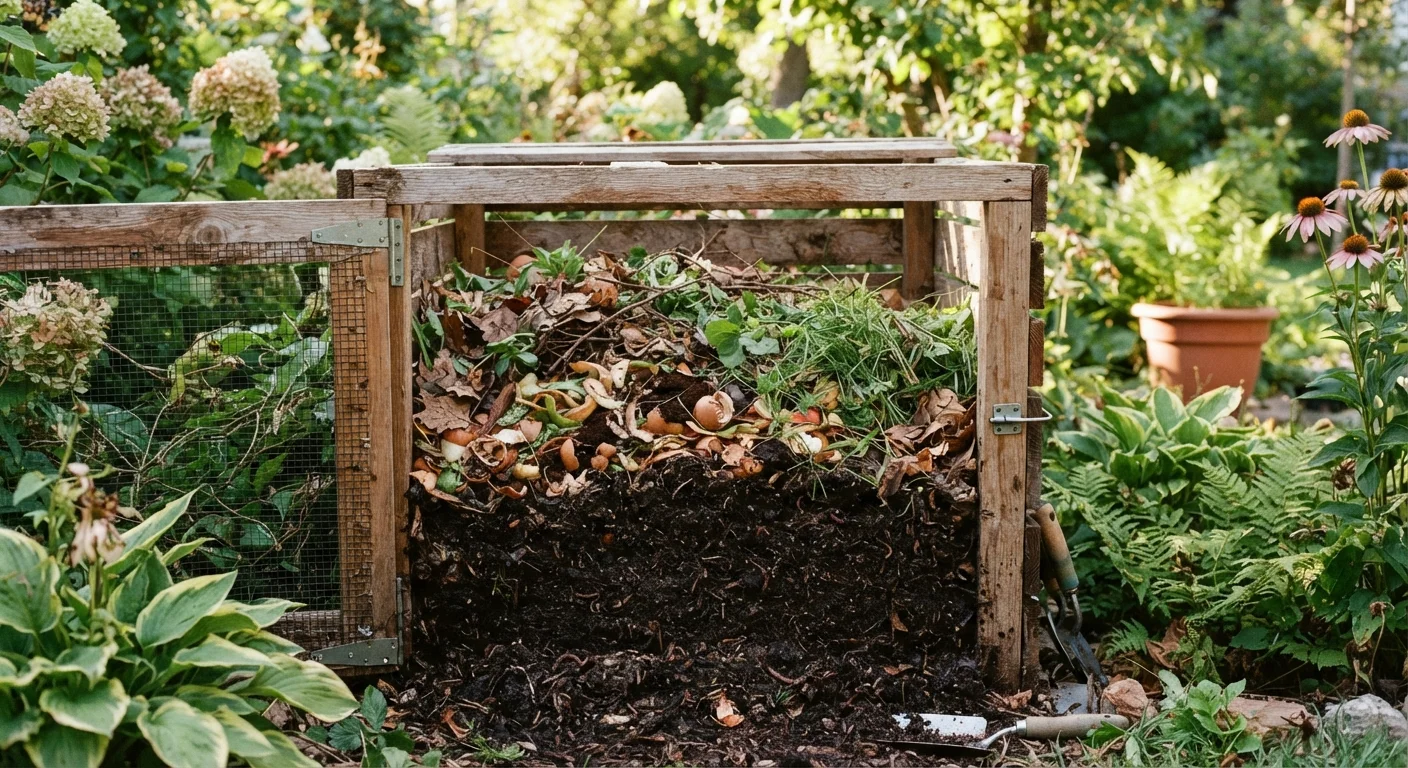
Key Takeaways
- Composting is a biological process driven by microorganisms that need carbon, nitrogen, moisture, and oxygen to thrive.
- A balanced carbon-to-nitrogen ratio of roughly 25-30:1 is the single biggest factor in how quickly a pile breaks down.
- Finished compost improves soil structure, water retention, drainage, and biological activity simultaneously.
- Compost is not a fertilizer replacement - it's a soil conditioner that makes nutrients more accessible over time.
- Turning the pile regularly and maintaining adequate moisture (like a wrung-out sponge) dramatically speeds decomposition.
- Most kitchen and garden waste can be composted safely; meat, dairy, and cooked oils should generally be excluded from open bins.
Home Composting
Composting is the controlled biological decomposition of organic matter - food scraps, yard waste, and other carbon-rich or nitrogen-rich materials - into a stable, nutrient-dense amendment called humus or finished compost. Microorganisms, fungi, and invertebrates break down raw materials over weeks to months, producing a dark, crumbly substance that improves almost any soil type. Unlike store-bought soil amendments, compost is something you can make for free from materials you already generate.
The decomposition process is aerobic - it depends on oxygen - which is why turning the pile matters. Anaerobic decomposition also occurs (such as in sealed bokashi systems) but produces different byproducts and an acidic intermediate that requires additional curing before use.
The Biology Behind the Pile
Composting works because it harnesses a community of living organisms that already exist in soil and organic matter. Bacteria are the primary decomposers, responsible for most of the heat a well-built pile generates. Fungi break down tougher lignin-rich materials like wood chips and straw that bacteria struggle to process. Actinomycetes - a type of filamentous bacteria visible as gray-white threads - tackle cellulose. Invertebrates like pill bugs, centipedes, and eventually earthworms move in later to fragment material and further enrich it.
For this community to thrive, four inputs must be in balance:
- Carbon (browns): Dead leaves, cardboard, straw, wood chips - provides energy for microorganisms.
- Nitrogen (greens): Vegetable scraps, fresh grass clippings, coffee grounds - provides protein for microbial growth.
- Moisture: The pile should feel like a wrung-out sponge - damp but not dripping.
- Oxygen: Aerobic bacteria need airflow; turning the pile reintroduces it and prevents anaerobic odors.
When these four factors align, the pile's interior temperature can reach 130-160°F - hot enough to destroy many weed seeds and pathogens, and a reliable sign that decomposition is working efficiently.
~30%
Household waste that is compostable
The U.S. EPA estimates that food and yard waste together make up roughly 30% of what Americans throw away - material that could otherwise be composted.
130-160°F
Core temperature of an active hot compost pile
University extension programs note that sustained temperatures in this range destroy most common weed seeds and many soil-borne pathogens.
25-30:1
Ideal carbon-to-nitrogen ratio
Soil scientists consistently cite this range as optimal for supporting rapid aerobic decomposition by microbial communities.
What Compost Actually Does to Your Soil
Finished compost improves soil in ways that no single synthetic input can replicate, because its benefits are structural and biological, not just chemical.
In clay-heavy soils, compost particles wedge between clay platelets, opening up pore space and dramatically improving drainage and root penetration. In sandy soils, the organic matter acts like a sponge, slowing water movement and holding nutrients that would otherwise leach below root depth. Either way, the result is a more workable, productive growing medium.
At the biological level, compost introduces and feeds a diverse population of soil microorganisms. These microbes form relationships with plant roots that improve nutrient uptake - particularly for phosphorus - and produce compounds that suppress some soil-borne pathogens. This is why gardeners who consistently apply compost often notice fewer disease problems over time, even without changing other practices.
Compost also buffers soil pH gradually over time, which affects how readily plants can access nutrients already present in your soil. For a deeper look at why pH matters as much as what you feed your garden, see our guide on soil pH and plant health.
Test Your Compost Before Using It
Finished compost should smell earthy - like forest floor - not sour or ammonia-like. It should be dark brown, crumbly, and largely unrecognizable as its original ingredients. If large chunks of material remain or it smells off, give the pile more time and another turn before applying it to plants. Unfinished compost can temporarily tie up soil nitrogen as it continues breaking down.
Building and Managing Your Pile
The fastest results come from building the pile correctly from the start rather than troubleshooting later. A useful mental model is lasagna layering: alternate thin layers of browns and greens, starting and ending with carbon-rich material to discourage pests and odors at the surface.
Particle size matters more than most beginners expect. Shredding leaves, chopping vegetable scraps, and breaking down cardboard significantly increases the surface area microorganisms can work on - a pile built with whole pumpkins and intact newspapers will take many times longer to break down than one built with the same materials chopped small.
Minimum pile size is also important. A pile smaller than about 3 feet in all dimensions loses heat too quickly to sustain active decomposition through cold weather. Larger piles retain heat better but can become difficult to turn. A 3×3×3-foot to 4×4×4-foot pile is a practical target for most home situations.
Once established, turn the pile every 1-2 weeks if you want hot, fast compost. Each turn reintroduces oxygen and moves cooler outer material toward the hot center. If you prefer a low-effort approach, simply add materials and turn occasionally - the pile will still produce finished compost, just on a longer timeline.
If you plan to use finished compost in a new vegetable garden, our vegetable garden setup guide covers how to incorporate it into beds before planting.
Compost in the Broader Garden System
Compost works best as part of a layered soil-care strategy, not a standalone fix. A 1-2 inch top-dressing of finished compost applied each spring feeds soil biology through the growing season and gradually builds organic matter content over multiple years. For established beds, compost pairs well with organic mulch applied over the top - the mulch slows moisture loss and eventually breaks down into additional organic matter itself.
For lawns, a light application of finished compost - sometimes called topdressing - can be worked in after core aeration, allowing the compost to fall into the channels left by the aerator and directly feed root-zone soil biology.
Understanding compost's role also helps clarify when a separate fertilizer input is appropriate. Compost releases nutrients slowly as microbes continue to break it down, which means it won't deliver a rapid green-up the way a nitrogen-heavy fertilizer will. For situations requiring targeted nutrient delivery, comparing organic and synthetic fertilizer options alongside compost use gives a more complete picture. Think of compost as building the infrastructure - healthy, biologically active soil - that makes every other input more effective.