

Key Takeaways
- Six or more hours of direct sunlight per day is the single most important site requirement for most vegetables.
- Starting with a small plot - 4×8 feet is a practical beginner size - prevents overwhelm and reduces wasted effort.
- Healthy, well-amended soil is the foundation of a productive garden and worth investing time in before planting.
- Choosing easy crops like lettuce, radishes, and bush beans builds early confidence and delivers quick results.
- Consistent, deep watering encourages strong root development and reduces vulnerability to drought and disease.
Start here
Choosing the Right Spot
Next
Planning Your Garden Layout
Then
Preparing the Soil
Ready to plant
Selecting and Starting Your Plants
Keep it growing
Watering, Feeding, and Ongoing Care
Choosing the Right Spot
Location is the single decision that will shape every season that follows. Before buying a seed packet, spend a few days observing your yard. Track where sunlight falls and for how long - most vegetables require a minimum of 6 hours of direct sun daily, with fruiting crops like tomatoes and peppers performing best with 8 or more.
Proximity to water matters nearly as much. A garden located far from an outdoor spigot makes consistent watering feel like a chore, and inconsistent watering is a leading cause of preventable crop failure. Choose a spot where a standard garden hose reaches comfortably.
Also check drainage. After heavy rain, avoid low-lying areas where water pools for hours. Prolonged soggy soil suffocates roots and invites fungal disease. Gently sloped or flat ground that drains within 30-60 minutes of rain is ideal.
Direct seeding
Planting seeds directly into the garden soil where they will grow to maturity, rather than starting them indoors and transplanting later.
Transplant
A young plant started in a nursery or indoors and then moved to its permanent spot in the garden. Transplants give crops a head start in shorter growing seasons.
Soil pH
A measure of how acidic or alkaline your soil is, rated on a scale from 0 to 14. Most vegetables grow best in slightly acidic to neutral soil, roughly pH 6.0-7.0.
Organic amendment
Material added to soil to improve its structure, fertility, or drainage. Compost is the most common and widely available example.
Mulch
A layer of material - such as straw, wood chips, or shredded leaves - spread over the soil surface to retain moisture, suppress weeds, and regulate temperature.
Cool-season crops
Vegetables that grow best in cooler temperatures, typically spring or fall, and can often tolerate light frost. Examples include lettuce, spinach, peas, and broccoli.
Planning Your Garden Layout
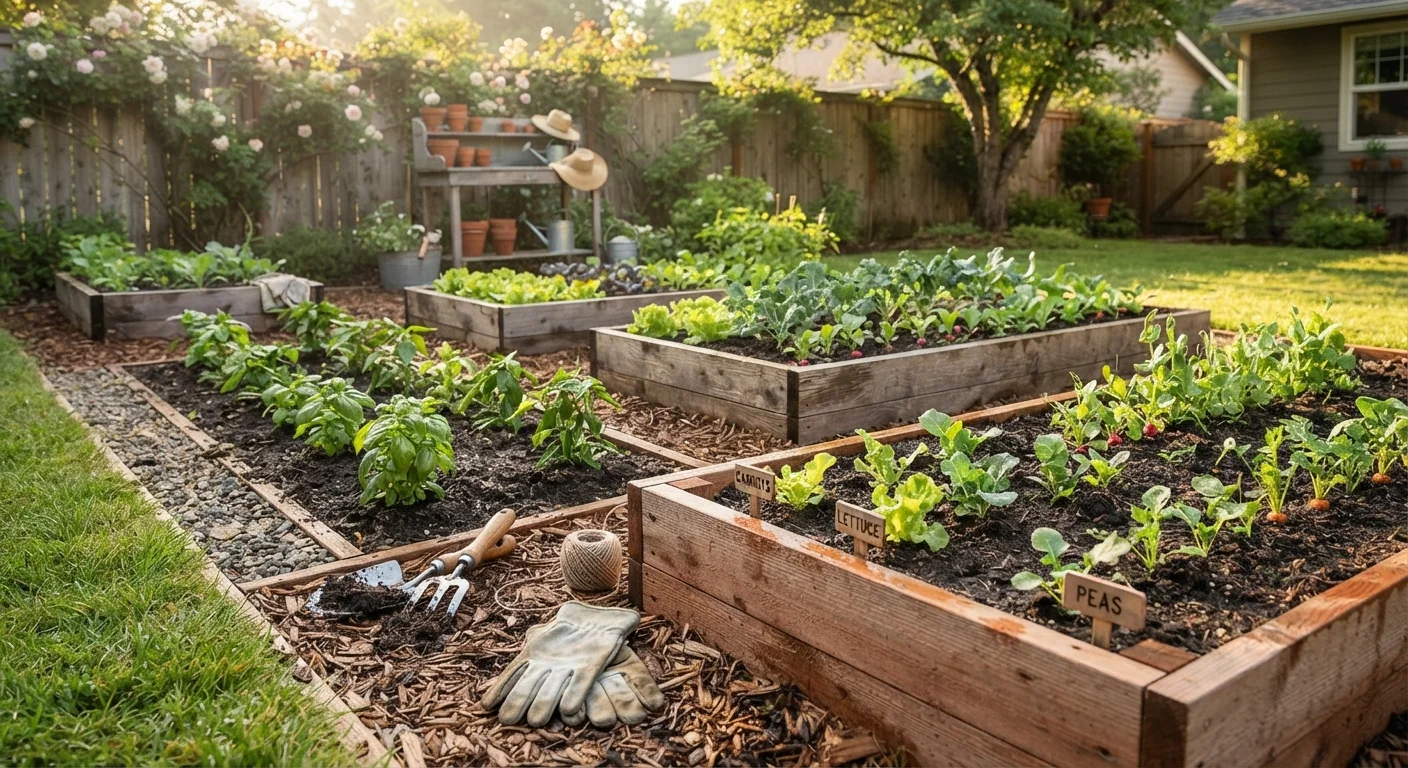
Resist the urge to go big in year one. A 4×8-foot plot is a practical beginner size - large enough to grow meaningful quantities of several crops, small enough to stay manageable on a weekend schedule. You can always expand once you understand how much time and attention your garden actually demands.
Sketch your layout on paper before digging a single hole. Tall plants like pole beans or tomatoes belong on the north side so they don't cast shade over shorter crops. Group plants with similar water needs together, and leave clear walking access so you can weed, harvest, and inspect plants without stepping on soil (compaction harms root growth).
If you're weighing whether to build raised beds or plant directly in the ground, that decision affects your budget and soil prep approach. Our guide to raised beds vs. in-ground planting walks through the real trade-offs of each method.
Preparing the Soil
Good soil is a vegetable garden's engine. Most home lawns and bare patches contain compacted subsoil with little organic matter - not the loose, dark, crumbly texture that vegetables thrive in. The fix is organic amendment, most affordably delivered through compost.
Work 2-4 inches of compost into the top 10-12 inches of your garden bed before planting. This improves drainage in clay soils, water retention in sandy soils, and feeds the microbial life that makes nutrients available to plant roots. If you'd like to make compost yourself rather than buying bags, our companion guide on composting at home explains exactly how the process works.
For roughly $10-$20, a basic soil pH test kit from a garden center will tell you whether your soil is acidic or alkaline. Most vegetables prefer a pH between 6.0 and 7.0. Lime raises pH; sulfur lowers it. Adjust only if your test indicates you're significantly outside that range.
Test Before You Amend
Amending soil without knowing its baseline pH or nutrient level is guesswork that can waste money. A basic pH test costs under $20 and takes about 10 minutes. Many cooperative extension offices also offer soil testing services for a modest fee, often with tailored amendment recommendations included.
Selecting and Starting Your Plants
Choose crops you actually want to eat - there's no point harvesting bushels of something your household won't use. For your first season, lean toward fast-maturing, forgiving varieties. Radishes mature in as few as 25 days, giving you early feedback and confidence. Bush beans, lettuce, and zucchini are similarly reliable for beginners.
You have two starting options: direct seeding (planting seeds directly in the garden) or transplanting (buying seedlings from a nursery and planting them out). Direct seeding costs less and works well for crops that dislike having their roots disturbed - carrots, beets, and beans fall into this category. Transplants give warm-season crops like tomatoes and peppers a head start, which matters in shorter growing seasons.
Read seed packets and transplant tags carefully. Spacing recommendations exist for good reason - crowded plants compete for light, water, and nutrients, and dense foliage traps humidity that encourages disease. When in doubt, err toward giving plants more room.
Once your garden is established, pests will find it. Before reaching for chemical treatments, consider physical barriers, companion planting, and beneficial insects. Our guide to non-chemical garden pest control covers practical first-response strategies.
Watering, Feeding, and Ongoing Care
Most vegetable gardens need roughly 1 inch of water per week. Rather than light daily sprinkling - which encourages shallow roots - water deeply two or three times a week. A simple rain gauge helps you track whether natural rainfall is covering your needs and how much supplemental irrigation to add.
Mulching around plants with 2-3 inches of straw, shredded leaves, or wood chips reduces moisture evaporation, suppresses weeds, and moderates soil temperature. It's one of the highest-return habits in vegetable gardening and saves meaningful time on both watering and weeding.
Fertilize based on what your plants tell you. Pale, slow-growing plants often signal nitrogen deficiency; a balanced granular or liquid fertilizer applied according to package directions addresses this without guessing. Avoid the temptation to overfeed - excess nitrogen produces lush foliage at the expense of fruit production.
Finally, harvest regularly. Many vegetables - zucchini, beans, cucumbers - produce more prolifically when picked frequently. Leaving overripe fruit on the plant signals it to stop producing. Check your garden every two to three days once crops begin maturing, and enjoy the results of the groundwork you've laid.