

Key Takeaways
- Bare patches rarely have a single cause - soil, pests, foot traffic, and watering habits all play a role.
- Reseeding over an unresolved problem almost always fails; identify the cause first.
- Soil compaction, grub damage, and fungal disease each require a distinctly different fix.
- Matching your grass type to your climate is foundational to preventing recurring bare spots.
- A simple soil test can reveal deficiencies that explain persistent thinning or die-off.
Why Diagnosing First Always Beats Reseeding First
It's tempting to grab a bag of grass seed and cover the problem. But bare patches that reappear in the same spots season after season are telling you something important: the underlying condition hasn't changed. Grass seed dropped into compacted, waterlogged, nutrient-deficient, or fungus-infected soil is unlikely to establish - it simply repeats the failure cycle.
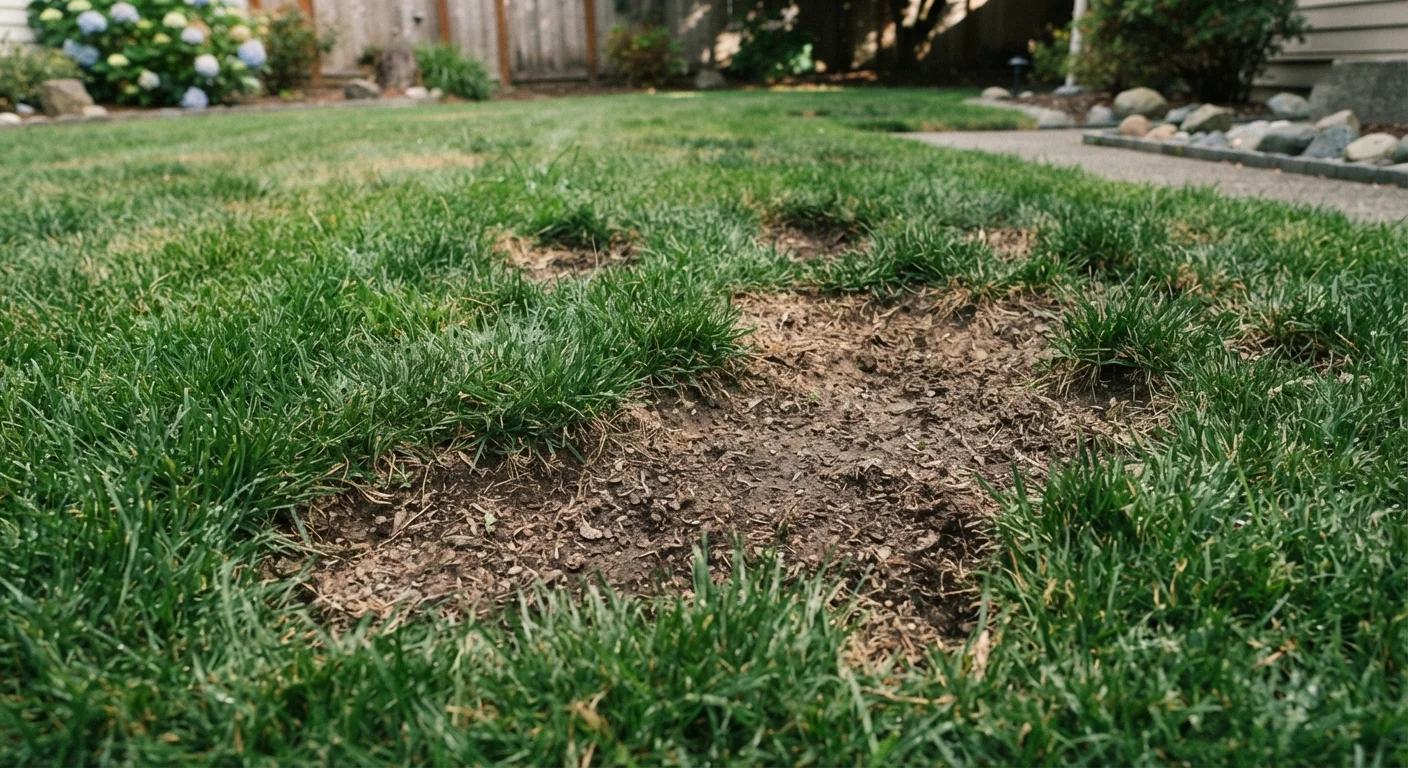
Before you reach for seed or sod, take 10 minutes to examine the patch closely. Look at the shape (irregular vs. circular), the edges (sharp vs. gradual), the soil beneath (hard vs. soft, wet vs. dry), and whether there's any discoloration, odor, or insect activity. These clues narrow the cause significantly. Pairing your observations with a simple inexpensive soil test from a local cooperative extension service or garden center gives you a reliable chemical baseline. From there, the fix becomes straightforward rather than guesswork.
Pet Urine and Fertilizer Spills Look Similar
Both can produce dead patches surrounded by unusually green grass - the nitrogen concentration kills the center while stimulating growth at the diluted edges. Before assuming one cause, check your records: did you fertilize recently, and is a pet using that area? The remedies differ. Pet damage requires dilution (water the area heavily after incidents); fertilizer burn may need the top layer of soil removed and replaced before reseeding will succeed.
The Most Common Mistakes That Create - and Perpetuate - Bare Patches
Most bare-spot problems are either caused or made worse by a handful of recurring lawn care errors. Understanding why these mistakes happen is just as valuable as knowing how to fix them, because many are counterintuitive - what feels like good care can actively harm your turf.
Reseeding without removing or neutralizing the original cause of the bare patch.
Why it happens: Homeowners focus on the visible symptom - missing grass - rather than the condition that killed it. Seed is inexpensive and feels like a logical fix.
Overwatering or watering at the wrong time, creating conditions that promote fungal disease.
Why it happens: Many homeowners believe more water always means healthier grass. Evening watering is convenient but leaves blades wet overnight, encouraging fungal growth.
Mowing too short ("scalping"), which stresses grass and exposes soil to drying and weed competition.
Why it happens: Shorter cuts seem like they'd reduce mowing frequency, and a freshly mowed lawn looks clean. The 'shorter is better' assumption is widespread but harmful.
Ignoring soil compaction as a cause of persistent bare patches, especially in high-traffic areas.
Why it happens: Compaction is invisible on the surface. Without probing the soil, it's easy to assume the problem is something else - low seed quality, shade, or drought.
Applying fertilizer unevenly or at excessive rates, causing chemical burn that kills turf in streaks or spots.
Why it happens: Spreader settings are often estimated rather than calibrated, and the connection between a fertilizer application and a patch appearing days later isn't always obvious.
Skipping a soil test and applying amendments based on assumption rather than actual soil chemistry.
Why it happens: Soil tests feel like an extra step, and many homeowners assume fertilizer alone is sufficient without knowing the soil's pH or nutrient profile.
For a broader view of how seasonal habits connect to lawn health year-round, see the complete seasonal lawn care guide.
Soil and Grass Variety: The Foundation Most Homeowners Overlook
Even perfect watering and mowing habits can't compensate for a grass variety that's wrong for your climate or a soil profile that can't support root development. Cool-season grasses such as Kentucky bluegrass and tall fescue thrive in northern regions but go dormant or die under sustained summer heat. Warm-season varieties like Bermudagrass and zoysiagrass, conversely, turn brown and thin badly during cool winters. When the variety is mismatched to the climate, bare patches appear predictably at stress points in the calendar.
Similarly, soil pH outside the range of roughly 6.0-7.0 (slightly acidic to neutral) locks out nutrients even when fertilizer is applied. Compacted clay soils shed water and suffocate roots; overly sandy soils drain too fast to sustain moisture. Both show up as bare or thin patches that move around the yard with sun, slope, and foot-traffic patterns.
Choosing the right grass variety for your climate is one of the highest-leverage decisions you can make before investing in repairs. And if compaction is part of the picture, lawn aeration may be a necessary step before overseeding.
~40%
Lawn failures linked to soil compaction
Turf specialists frequently cite soil compaction as a contributing factor in a large proportion of recurring bare-patch complaints, particularly in residential yards with clay-heavy soils.
6.0-7.0
Ideal soil pH range for most grass types
Most university extension programs recommend this pH window as the sweet spot for nutrient availability; values outside this range can lock out nitrogen and phosphorus even when fertilizer is applied.
Putting It Together: A Simple Diagnosis Checklist
Walk each bare patch and work through these questions in order:
- Shape and pattern: Circular patches suggest fungal disease or a localized chemical burn. Irregular, spreading areas point to compaction, moisture imbalance, or pest activity.
- Soil texture: Dig 2-3 inches with a trowel. Hard, gray, or root-bound soil indicates compaction. Waterlogged soil with a sour smell suggests poor drainage or overwatering.
- Thatch layer: Part the grass near the patch edge. A spongy layer thicker than half an inch can block water and harbor disease.
- Pest check: Pull back a square foot of turf near the edge. More than five to eight white grubs per square foot is a threshold worth addressing before reseeding.
- Dog or chemical exposure: Bright green rings around a dead center are a classic sign of pet urine concentration or fertilizer spill.
Once you've matched symptoms to a likely cause, the spring lawn prep checklist provides a practical sequence for soil amendment, aeration, and overseeding in the right order. Fixing the cause first makes every seed you plant far more likely to take hold and stay.
This article provides general lawn care information for educational purposes. Soil conditions, climate, grass varieties, and pest pressures vary widely by region. Consult your local cooperative extension service for guidance specific to your area.