

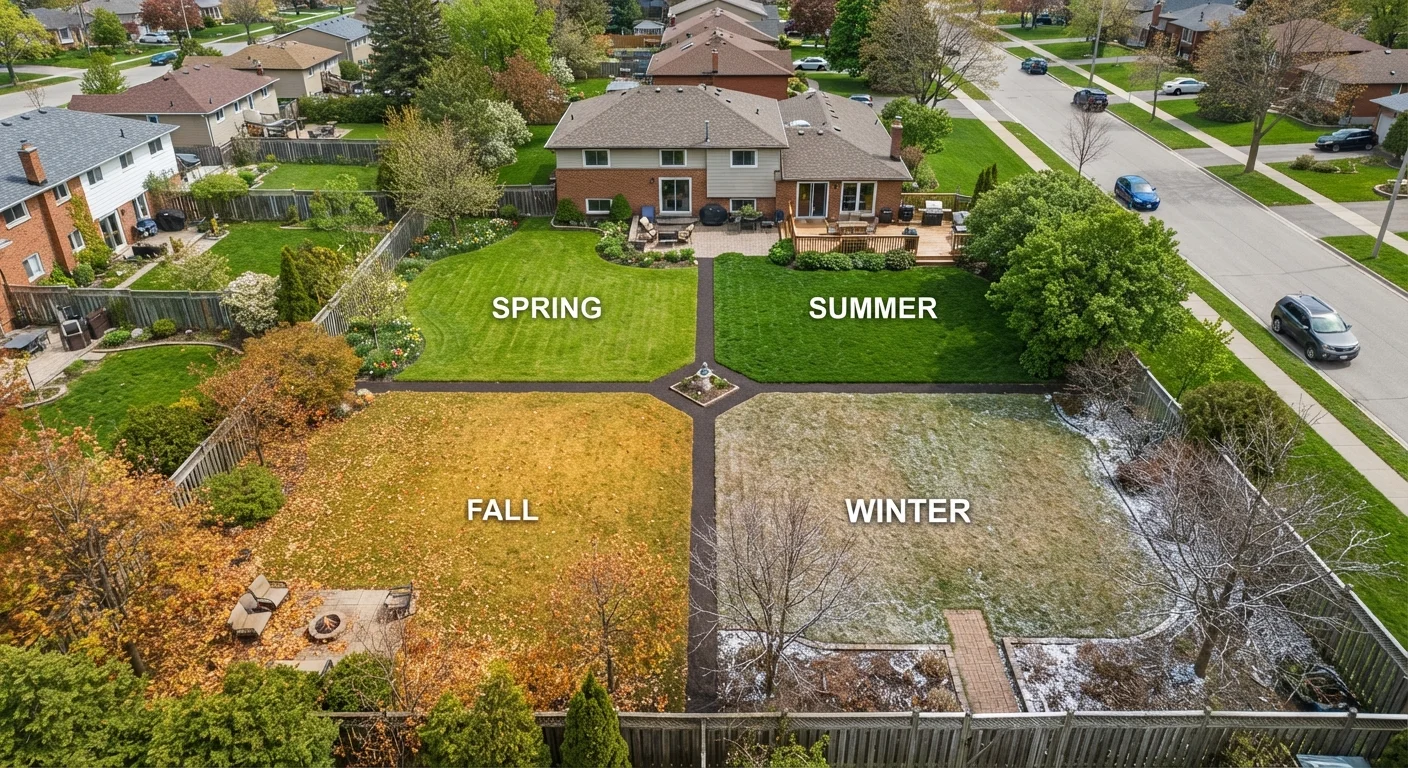
Key Takeaways
- Grass type - cool-season or warm-season - determines the right timing for every major lawn task.
- Fall is the single most impactful season for cool-season grasses; spring fills that role for warm-season varieties.
- Overwatering and over-fertilizing are among the most common and costly lawn care mistakes.
- Aeration is not needed every year on every lawn - assess compaction before scheduling it.
- Skipping winter preparation leads to preventable spring damage and costly repairs.
Why Seasonal Timing Makes or Breaks Your Lawn
Healthy grass isn't the result of one heroic effort - it's the product of consistent, well-timed care matched to the growth cycles of your specific grass type. Apply fertilizer at the wrong time and you fuel weeds or burn roots. Aerate when the ground is baked or frozen and you waste the effort entirely.
The single most important variable in any seasonal lawn plan is grass type. Cool-season vs. warm-season grasses grow, rest, and respond to stress at opposite times of year. Cool-season grasses - Kentucky bluegrass, tall fescue, perennial ryegrass - thrive when temperatures sit between 60°F and 75°F and go semi-dormant in summer heat. Warm-season grasses - Bermuda, Zoysia, St. Augustine - peak between 80°F and 95°F and turn brown and dormant in cool weather. Every recommendation in this guide should be filtered through that lens.
For a broader look at how lawn care fits into your overall property upkeep, the seasonal home maintenance breakdown is a useful companion reference.
Spring: Wake Up and Set the Foundation
Spring is about assessment and preparation, not aggressive intervention. Resist the urge to jump straight to fertilizing - doing so too early encourages lush top growth before roots have recovered from winter, leaving the lawn vulnerable.
Key Spring Tasks
- Soil test first: A soil test (available through most county extension offices for a modest fee) tells you exactly what nutrients and pH adjustments your lawn needs, preventing over-application and wasted money.
- Light raking and debris clearing: Remove dead matted grass and debris to improve air circulation and reduce disease pressure.
- Aeration (if needed): Spring is the right window for warm-season grasses. For cool-season lawns, fall is generally superior - but if your soil is heavily compacted, a spring pass can help. See when and whether your lawn actually needs aeration before scheduling.
- Pre-emergent weed control: Apply before soil temperatures reach 55°F consistently - typically when forsythia blooms in most of the country - to suppress crabgrass germination.
- First fertilizer application: For warm-season grasses, begin fertilizing once the lawn is fully green and actively growing. For cool-season grasses, a light, slow-release application is appropriate in early spring; heavy feeding belongs in fall.
A detailed spring checklist is available in our spring lawn prep guide.
Test Before You Treat
A basic soil pH and nutrient test costs roughly $15-$30 through your local cooperative extension office and eliminates guesswork on fertilizer type and quantity. Most lawn problems - yellowing, patchy growth, persistent weeds - have a soil-level cause that a test will reveal. Treating without testing often means spending money on products your lawn doesn't need.
Summer: Protect, Don't Stress
Summer is survival mode for cool-season grasses and peak performance season for warm-season varieties. Adjust your approach accordingly.
Mowing Height
Raise your mowing height by half an inch to one inch in summer. Taller grass blades shade the soil, reducing moisture evaporation and discouraging weed germination. Never remove more than one-third of the blade length in a single mow - the so-called "one-third rule" - as scalping stresses roots significantly.
Watering Strategy
Water deeply and infrequently: roughly one inch of water per week (including rainfall), delivered in one or two sessions rather than daily light sprinkles. Deep watering encourages roots to grow downward, improving drought resilience. Water in the early morning to minimize evaporation and reduce fungal disease risk.
Fertilizing Caution
Avoid nitrogen-heavy fertilizer applications on cool-season grasses during summer heat. Pushing growth during stress periods increases disease susceptibility. Warm-season grasses, by contrast, respond well to mid-summer feeding since they are in active growth.
Don't Fertilize Dormant Cool-Season Grass
Applying nitrogen fertilizer to heat-stressed or semi-dormant cool-season grass in midsummer can burn the lawn and increase its vulnerability to disease. If your cool-season lawn has gone tan or straw-colored during a summer dry spell, it is likely dormant - not dead. Withhold fertilizer and limit irrigation to about half an inch every two to three weeks to keep the crown (growing point) alive without forcing growth.
Fall: The Most Important Season for Grass
For cool-season lawns - which cover the majority of northern U.S. climates - fall is unquestionably the most high-impact lawn care window of the year. Cooler air and still-warm soil create ideal conditions for root development, overseeding, and nutrient uptake.
60-65°F
Ideal soil temp for cool-season grass seed germination
Soil temperature, not air temperature, determines germination success - a soil thermometer is a worthwhile investment for overseeding decisions.
1 inch/week
Recommended weekly water for most lawn grasses
University extension guidelines broadly recommend one inch of water per week, including rainfall, delivered in deep, infrequent sessions.
⅓ rule
Maximum grass blade to remove per mowing session
Removing more than one-third of the blade height in a single cut stresses root systems and is a leading cause of summer lawn decline.
Fall Priority Tasks
- Aeration: Core aeration in early fall loosens compacted soil, improves drainage, and allows fertilizer and seed to reach the root zone efficiently.
- Overseeding: Spread fresh seed into thin or bare areas immediately after aeration. Cool-season grass seed germinates most reliably when soil temperatures are between 50°F and 65°F.
- Fertilizing: A fall fertilizer application - sometimes called a "winterizer" - replenishes nutrients drawn down during summer and builds carbohydrate reserves that fuel early spring green-up. Focus on potassium and phosphorus alongside nitrogen.
- Leaf management: Don't let thick layers of fallen leaves smother grass through winter. Mulch them with your mower if the layer is light; rake or blow and remove heavy accumulations.
- Final mow: Gradually lower mowing height for the final two to three cuts of the season, ending at approximately 2 to 2.5 inches for most cool-season grasses. This reduces the risk of matting and snow mold.
Apply your fall fertilizer after the lawn has stopped actively growing but while the ground is still unfrozen - typically late October to mid-November in most northern climates. The grass won't use the nitrogen for top growth; instead it stores it as carbohydrates for an earlier, stronger spring green-up.
This timing strategy, sometimes called 'late-fall fertilization,' is well-supported by university turfgrass research and is consistently one of the highest-return single applications a homeowner can make.
When overseeding in fall, skip the starter fertilizer if you've already applied a full-rate fertilizer at aeration time. Doubling up pushes seedling top growth at the expense of root development, and seedlings with shallow roots are far more vulnerable to winter kill.
Newly germinated grass prioritizes root establishment when nitrogen levels are moderate - excess nitrogen shifts energy toward blade production instead.
Winter: Dormancy and Low-Maintenance Watchfulness
Winter asks little of homeowners, but a few habits protect months of prior investment. Once grass enters dormancy - triggered by consistent soil temperatures below 50°F for cool-season types or air temperatures below 55°F for warm-season - growth effectively stops and the lawn's primary need is to be left undisturbed.
What to Avoid
- Foot traffic on frozen or frost-covered grass: Frozen grass blades are brittle; walking on them breaks cell walls and leaves visible damage that persists into spring.
- De-icing salt near lawn edges: Sodium chloride causes soil damage and grass burn. Use sand or calcium-based alternatives near lawn borders where possible.
- Equipment storage on the lawn: Anything left sitting on dormant grass for weeks creates dead patches from compaction and light deprivation.
What to Do
Use winter downtime to service your mower blades, calibrate your spreader, and review last year's soil test results. Ordering seed or pre-emergent products now - before the spring rush - can be practical. Also inspect irrigation systems for freeze damage before the first spring use.
Building a Year-Round Lawn Care Calendar
Consistency matters more than perfection. A realistic, written calendar - even a simple one - prevents the most common failure mode: doing nothing until a problem is visible, then over-correcting. Map your tasks to the approximate soil temperature triggers rather than calendar dates, since regional climate variation can shift these windows by three to six weeks depending on your location.
| Season | Cool-Season Grasses | Warm-Season Grasses |
|---|---|---|
| Spring | Light feed, pre-emergent, assess aeration need | Aerate, fertilize as growth begins, overseed thin areas |
| Summer | Raise mow height, deep water, avoid fertilizing | Regular fertilizing, maintain watering, manage pests |
| Fall | Aerate, overseed, winterizer fertilizer, final mow | Reduce feeding, prep for dormancy, overseed with ryegrass if desired |
| Winter | No treatment; limit traffic, service equipment | No treatment; limit traffic, service equipment |
Before committing to a high-input lawn program, it's worth understanding what traditional maintenance actually costs over time. Our article on the hidden costs of a manicured lawn outlines realistic annual expenses and lower-maintenance alternatives worth considering.
Seasonal lawn care isn't about chasing perfection - it's about working with your grass's natural rhythms to get the most resilience from the least wasted input. Nail the timing on three or four key tasks per season and you'll consistently outperform lawns that receive sporadic, out-of-sync treatments year after year.