

Key Takeaways
- Many high-impact home upgrades require only a free weekend and basic tools, not a contractor.
- Curb appeal, weatherproofing, and storage improvements tend to have outsized influence on perceived home value.
- Consistent small upgrades compound over time, reducing repair costs and boosting buyer confidence.
- Materials for most projects on this list typically cost under $200, often far less.
- Proper surface prep and material selection matter more than speed - patience pays off.
Why Small Projects Move the Needle
Major renovations get most of the attention when homeowners talk about adding value, but the evidence tells a more nuanced story. Buyers and appraisers respond strongly to homes that feel well cared for - and that impression is built through dozens of smaller, visible details rather than one big remodel. For a deeper look at which renovation investments actually deliver at resale, see our analysis of renovation ROI.
The projects below share a few key traits: they're achievable in one or two days, they require no licensed trade work, and they address things buyers notice immediately - entry points, storage, lighting, and weather readiness. None of them demand demolition or a permit. What they do demand is a little patience and reasonable attention to prep work.
Prep Work Determines the Result
For painting and caulking projects especially, the quality of the finished product depends almost entirely on surface preparation - not speed. Clean surfaces, light sanding where needed, and painter's tape applied carefully before brush contact will produce results that hold up and look professional. Rushing the prep to get to the "real" work is the most common cause of disappointing outcomes on DIY projects.
Together, these upgrades form part of a broader maintenance rhythm. Our month-by-month maintenance breakdown can help you schedule them at the right time of year.
Repaint or Replace the Front Door
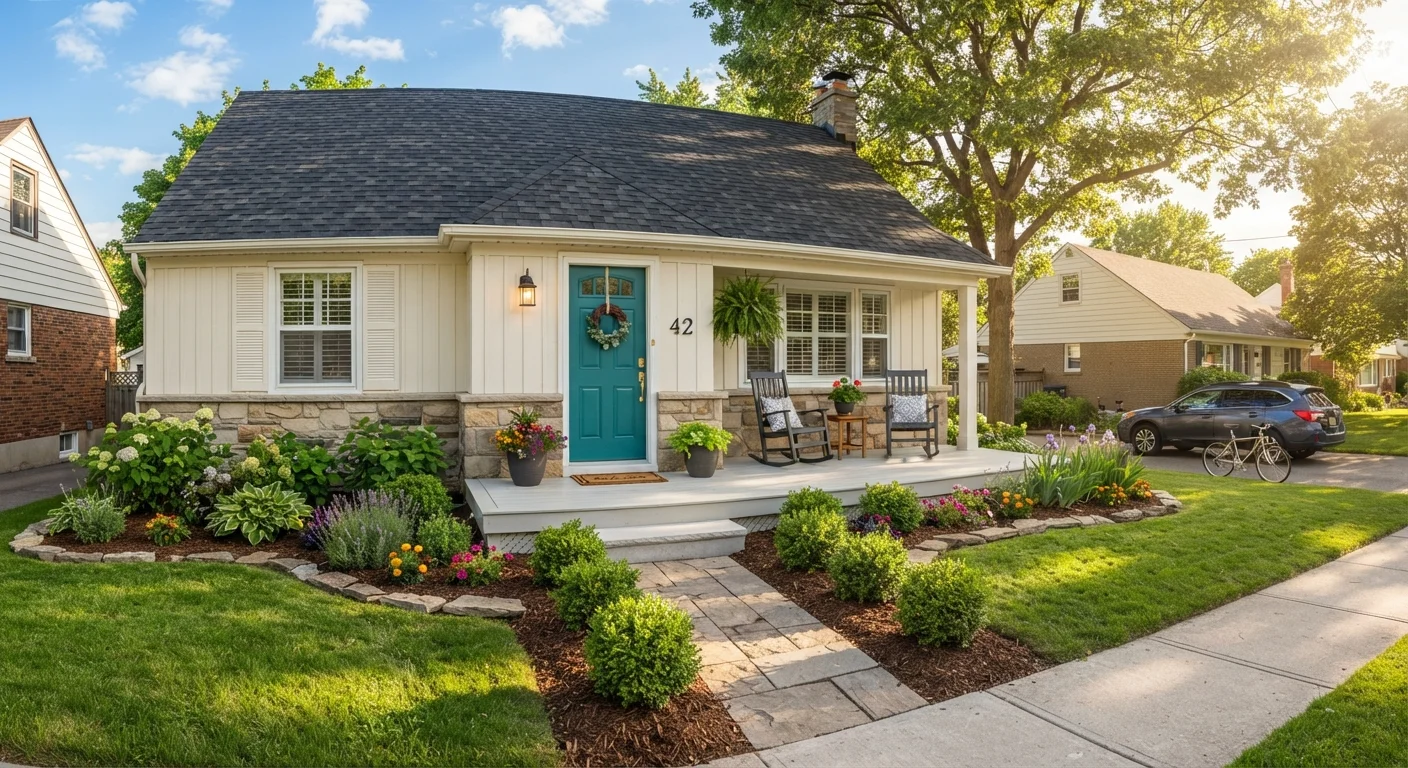
The front door is one of the first things anyone notices, and its condition signals how well the rest of the home has been maintained. A coat of exterior-grade paint in a current, complementary color can take a tired entryway from forgettable to genuinely inviting - usually in a single afternoon once prep work is done.
Sand lightly, clean the surface thoroughly, and use a paint formulated for exterior trim and doors. If the door itself is warped, cracked, or hollow-core steel with significant dents, replacing it outright is worth considering. New hardware - a deadbolt, handle set, and door knocker in a consistent finish - completes the update at modest additional cost.
A fresh front door color signals attentive ownership before buyers ever step inside.
Add or Refresh Mulch in Garden Beds
Fresh mulch is one of the fastest visual upgrades available to homeowners. A 2-3 inch layer of shredded hardwood or bark mulch suppresses weeds, retains moisture, moderates soil temperature, and - critically - makes planting beds look deliberately maintained rather than neglected.
Before adding new mulch, pull visible weeds, edge the bed cleanly with a flat spade or edging tool, and rake out any decomposed material from prior seasons. Avoid piling mulch against tree trunks or shrub stems, which can cause rot. Coverage costs vary by region and material, but a full refresh of average-sized beds is typically a low-cost project with an immediate visual return. For more outdoor upkeep ideas, browse our garden and lawn hub.
A crisp mulch layer makes the entire yard look intentional, not overgrown or ignored.
Seal Gaps Around Windows and Exterior Doors
Air infiltration around windows and doors quietly drives up energy bills and contributes to moisture intrusion - two things that concern both comfort-minded homeowners and potential buyers. Caulking deteriorates over time, and most homes have gaps that can be addressed in a morning with a tube of paintable exterior caulk and a caulk gun.
Look for cracked or missing caulk at window frames, door frames, where siding meets trim, and around utility penetrations. For door bottoms and threshold gaps, a replacement door sweep is a complementary fix that takes about 20 minutes. These tasks pair well with broader weatherization efforts - our article on weatherizing your home by season explains when each task has the greatest impact.
Caulking gaps is among the highest-return-per-dollar tasks available to any homeowner.
Install or Upgrade Interior Lighting Fixtures
Outdated or underperforming light fixtures - especially in entryways, dining areas, and bathrooms - have an outsized effect on how spacious and modern a room feels. Replacing a builder-grade flush-mount fixture with a updated semi-flush or pendant style is a project most homeowners with basic electrical comfort can complete in an afternoon.
Safety note: Always switch off the circuit breaker for the fixture you're replacing and verify the power is off with a non-contact voltage tester before touching any wiring. If you're uncertain about your home's wiring configuration, or if the junction box needs upgrading, consult a licensed electrician. Do not attempt fixture work in homes with aluminum wiring without professional guidance.
Updated light fixtures transform the perceived quality of a room faster than almost any other change.
Build Simple Garage or Closet Storage
Usable, organized storage is something buyers consistently notice - and something many homes lack. Freestanding wire shelving systems, wall-mounted bracket shelving, or basic slat-wall panels in a garage can be installed without carpentry expertise and dramatically increase the functional impression of a space.
Focus on vertical space that's currently wasted. In closets, a second hanging rod below shorter garments doubles usable hanging space. In garages, ceiling-mounted storage racks make use of overhead area that typically sits empty. These additions don't require permits in most jurisdictions, but always confirm with your local building department if you're unsure - rules vary by municipality.
Buyers assess storage immediately; organized, functional space reads as larger and more livable.
Power Wash Driveways, Walkways, and Siding
Algae, mildew, and ground-in dirt accumulate on exterior surfaces in ways that make a home look far older than it is. A pressure washer - available at many equipment rental outlets - can restore concrete, brick, and vinyl siding to a noticeably cleaner condition in a few hours.
Use appropriate pressure settings for each surface: lower pressure for painted wood or siding, higher for concrete. Keep the wand moving and maintain a consistent angle to avoid etching or streaking. Rinse from top to bottom. Avoid directing water under lapped siding or into vents. The improvement in curb appeal is often dramatic, and the effort involved is modest by comparison. This task fits naturally into the broader home maintenance rhythm that keeps exterior surfaces in good condition year-round.
Pressure washing can restore years of visual wear in a single afternoon with rented equipment.
Make It a Habit, Not a One-Time Event
The real power of weekend projects comes from repetition. A single afternoon spent caulking windows or refreshing mulch doesn't transform a home - but doing one or two small projects each season absolutely does. Homes that receive this kind of ongoing attention tend to avoid the deferred-maintenance spiral that leads to expensive emergency repairs. Our guide to low-cost tasks that prevent high-cost repairs covers the specific upkeep jobs that carry the highest protective value.
Think of these weekend efforts as an investment in the baseline condition of your home. Whether you're planning to sell in two years or stay for twenty, a well-maintained home is simply a more comfortable - and more valuable - place to live.
Know When to Call a Professional
The projects in this list are specifically chosen to avoid licensed trade requirements - but every home is different. If you discover rot behind trim, wiring that looks non-standard, or structural concerns during any weekend project, stop work and consult a qualified contractor or inspector. Proceeding past a red flag to finish a project can turn a small issue into a costly one.