

Why a Monthly Maintenance Rhythm Matters
Home systems don't fail all at once - they deteriorate gradually through neglect of small, recurring tasks. A month-by-month approach turns that reality into an advantage: short, targeted check-ins prevent the expensive compounding that happens when a clogged gutter or a dirty HVAC filter is left unaddressed for two or three seasons. If you're just getting started, our first-year homeowner guide provides helpful context for what to expect overall.
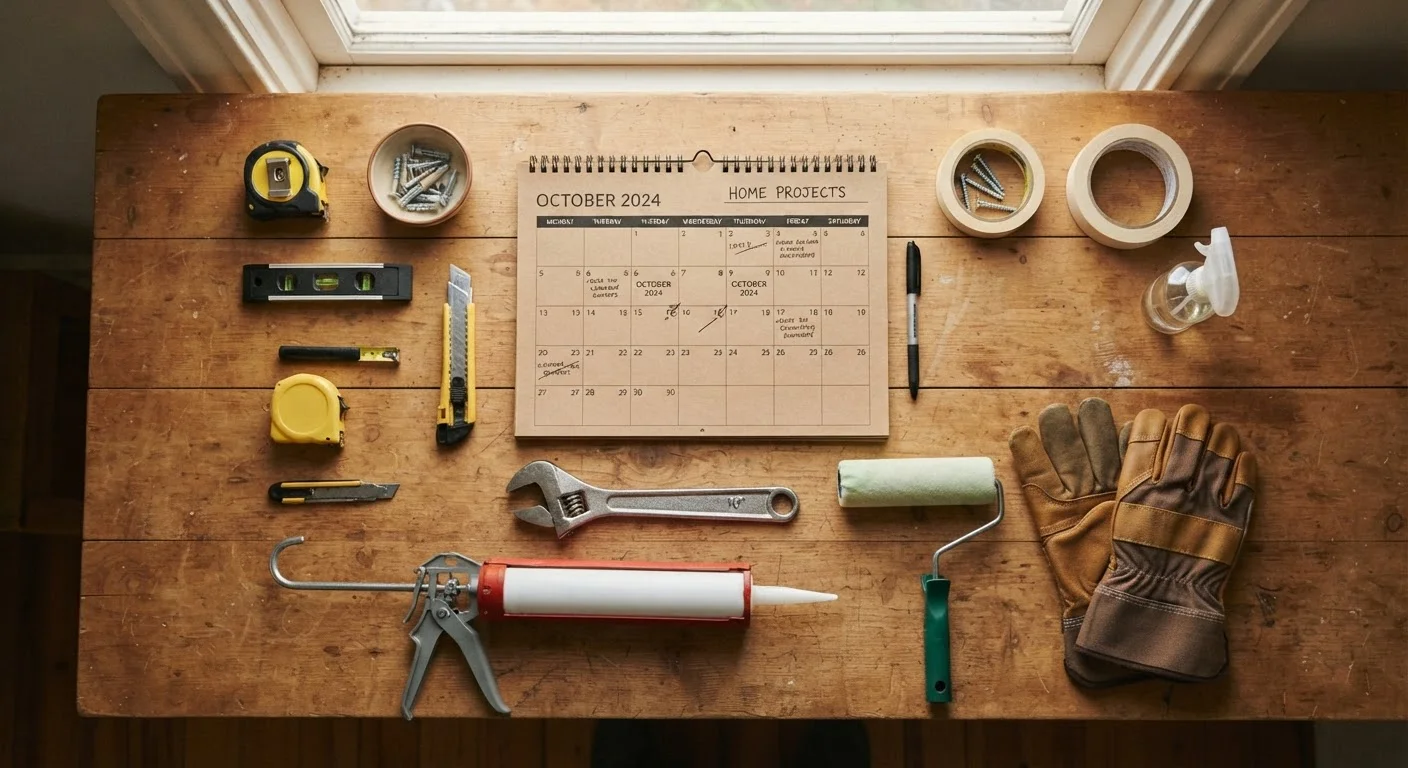
Think of this calendar as a living reference, not a rigid checklist. Climate zone, home age, and local building codes all affect timing. Use the month groupings below as a framework, then adjust based on your region.
Quarter by Quarter: What to Do and When
January - March: Winter Upkeep and Pre-Spring Prep
- Check pipe insulation in unheated spaces - basements, crawl spaces, and garages are most vulnerable to freezing temperatures.
- Test smoke and carbon monoxide detectors and replace batteries on a consistent schedule.
- Inspect attic insulation and ventilation - inadequate airflow here is a leading cause of ice dams in cold climates.
- Order HVAC service before peak cooling season - technicians book quickly once warmer weather arrives.
- Late March: Walk the exterior after the last hard freeze and note any cracked caulk, settling around foundation walls, or winter damage to siding.
April - June: Exterior Season Opens
- Clean gutters thoroughly after spring pollen and debris accumulate. Neglecting this step leads to the kind of water damage detailed in our guide on what happens when gutters are skipped.
- Test outdoor faucets and irrigation lines for freeze damage before committing to a full watering schedule.
- Inspect the roof - look for lifted shingles, missing flashing, or granule loss in downspout runoff. Schedule a professional inspection if anything looks off.
- Recaulk windows and door frames where cracking is visible - spring temperatures make sealants easier to apply evenly.
- Service lawn equipment before heavy use. Pair this with a lawn care plan; our seasonal lawn care breakdown covers timing by grass type.
Permits May Be Required for Some Tasks
Certain maintenance upgrades - such as replacing an electrical panel, adding insulation to bring a home up to code, or modifying plumbing - may require a permit in your municipality. Always check with your local building department before starting work that goes beyond routine upkeep. Unpermitted work can create liability issues and complicate future sales.
July - September: Summer Systems and Early Fall Readiness
- Replace HVAC filters every 1-3 months depending on filter type and household conditions (pets, allergies, dusty environments).
- Check deck and fence hardware - screws, bolts, and post anchors corrode faster in humid summer months.
- Inspect window screens for tears that allow insects to enter.
- Late August: Begin weatherization prep - seal air leaks around outlets, switch plates, and penetrations before heating season. Our weatherizing guide covers the full air-sealing process.
October - December: Winterization and Year-End Review
- Drain and store garden hoses; shut off and drain exterior faucets where possible.
- Clean gutters again after peak leaf fall - typically mid-to-late November in most U.S. regions.
- Have the heating system serviced if not done in spring; replace filters heading into heavy use season.
- Test the sump pump before winter rains arrive.
- December: Log everything completed this year. A maintenance log helps track warranties, service dates, and gives you documentation that supports home value at resale.
Building Your Maintenance Budget Around the Calendar
Timing maintenance tasks strategically can reduce costs. Trades such as HVAC, roofing, and landscaping often have slower periods in late winter and early fall when scheduling and pricing may be more favorable - though this varies by region and market. For a broader financial framework, consider reading about home maintenance reserve funds so you're not caught off-guard by larger seasonal expenses.
Understanding your home's four core systems - roof, foundation, HVAC, and plumbing - also helps you prioritize where to invest attention each season. Not every month will require equal effort, but a consistent rhythm across all twelve prevents the silent deterioration that turns small repairs into major renovations.
This article provides general home maintenance education and is not a substitute for professional inspection, local code compliance, or contractor advice. Always verify permit requirements with your local municipality before beginning work.