

Key Takeaways
- Skipping gutter cleaning twice a year can lead to water damage costing thousands of dollars.
- Clogged gutters are a leading cause of foundation damage, fascia rot, and basement flooding.
- Pests including mosquitoes, rodents, and carpenter ants actively colonize debris-filled gutters.
- Most gutter damage compounds silently - visible signs often appear only after serious harm is done.
- Cleaning gutters is a low-cost task that reliably prevents high-cost structural repairs.
The Hidden Cascade: What Clogged Gutters Actually Do
Gutters have one job: move rainwater from your roof to a safe discharge point away from your home. When that pathway clogs, water doesn't simply stop - it finds somewhere else to go. That somewhere else is almost always somewhere expensive.
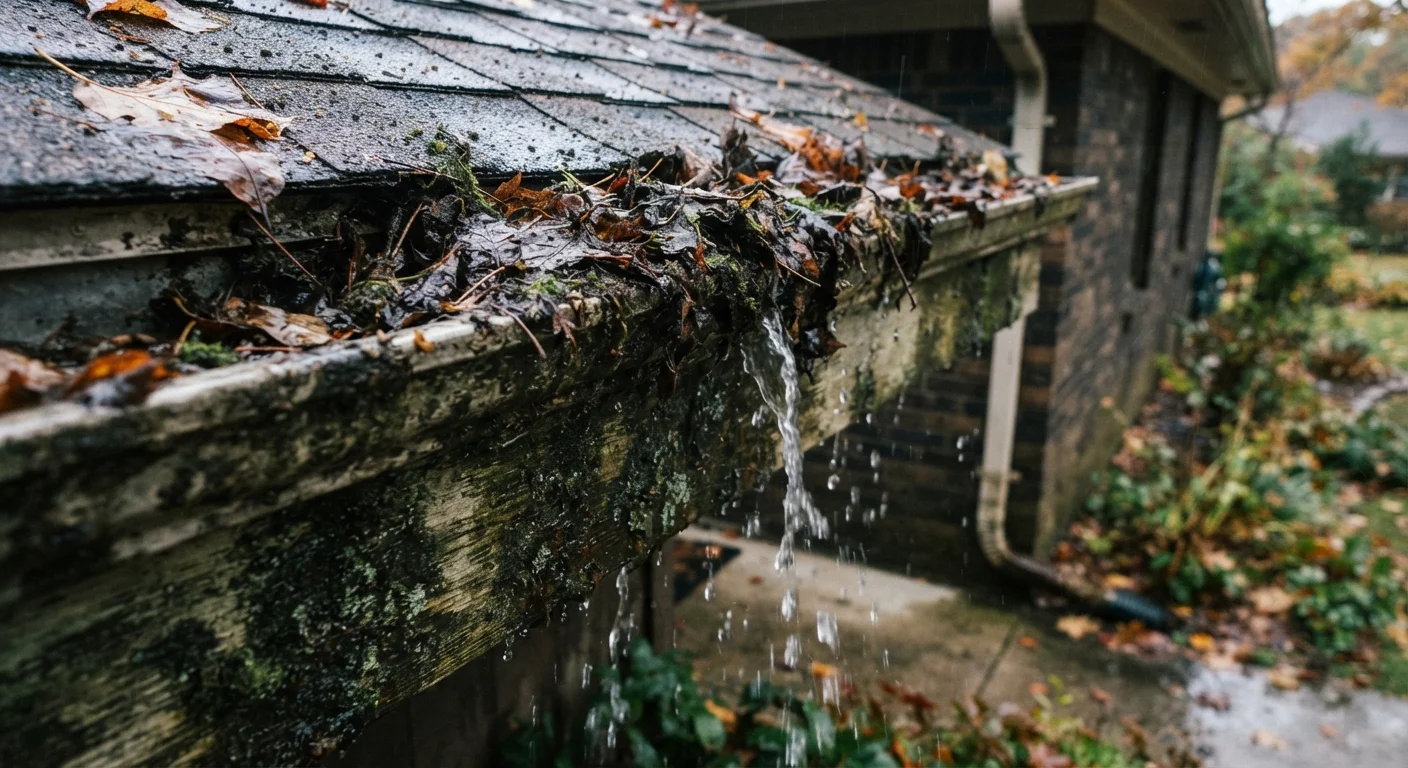
Standing water in a clogged gutter exerts sustained pressure against the fascia board (the horizontal board the gutter mounts to) and the soffit behind it. Wood in prolonged contact with moisture rots, and rot spreads laterally into rafters before most homeowners spot any exterior discoloration. The repair at that point shifts from a simple fascia replacement to a carpentry and possibly roofing job.
In winter climates, saturated debris freezes and expands, creating ice dams - ridges of ice that force meltwater under shingles and into the roof deck. Ice dam damage repairs, including interior ceiling and insulation work, are among the more costly outcomes of skipped gutter maintenance. Understanding how these systems interact is covered thoroughly in our overview of critical home systems.
$4,000-$10,000
Typical cost of water damage from clogged gutters
According to insurance industry estimates, interior water damage traced to failed gutters commonly falls in this range before factoring in structural repairs.
2×/year
Recommended minimum gutter cleaning frequency
Most building and home inspection professionals recommend cleaning gutters at least twice annually, with more frequent cleanings for homes under heavy tree cover.
$100-$250
Average professional gutter cleaning cost
Professional cleaning of a standard single-story home typically falls in this range, making it one of the most cost-effective preventive maintenance tasks available.
Common Gutter Maintenance Mistakes - and How to Correct Them
Most gutter neglect isn't intentional - it's a product of misunderstanding how quickly problems develop and which details matter most during a cleanout. The mistakes below are the ones that generate the largest repair bills.
Cleaning gutters only once a year instead of twice.
Why it happens: Many homeowners assume a single fall cleanout is sufficient, not realizing spring pollen, seed pods, and shingle grit accumulate just as quickly.
Ignoring downspout blockages while clearing the gutter channel.
Why it happens: Debris visible in the trough is easy to see and scoop; downspouts are out of sight and often forgotten until water backs up.
Failing to check that downspouts direct water at least four to six feet away from the foundation.
Why it happens: Homeowners focus on clearing debris but overlook where the water actually exits, assuming proximity to the home is harmless.
Waiting for visible overflow before deciding the gutters need attention.
Why it happens: Overflow is the obvious signal, but significant damage to fascia boards, soffits, and siding often occurs before water ever crests the gutter edge.
Neglecting to check for gutter pitch and sagging after cleaning.
Why it happens: People treat the task as purely about debris removal, not realizing that debris weight and ice load can pull hangers loose and alter the drainage slope over time.
Ladder Safety Is Non-Negotiable
Gutter cleaning requires working at height on a ladder, often on uneven or soft ground. Never lean a ladder against the gutter itself - gutters are not load-bearing. Use a stable, properly rated ladder, have a spotter present, and wear non-slip footwear. If your roof pitch is steep or gutters are higher than a single story, hiring a professional cleaner is the safer choice.
Pests, Mold, and the Problems You Don't See Coming
Beyond water damage, debris-filled gutters create ideal habitat for uninvited guests. Decomposing leaves retain moisture and warmth - exactly what mosquitoes need to breed. Standing water in a clogged gutter can produce mosquito larvae within days of a rain event.
Rodents, including mice and squirrels, use debris-packed gutters as nesting material and as a pathway onto the roof and into the attic. Carpenter ants, which cause significant structural damage over time, are drawn to the soft, wet wood that inevitably develops around chronically clogged gutters. Addressing a pest infestation after the fact costs considerably more - in money and disruption - than the cleanings that prevent it.
Mold is another consequence. Organic debris holds moisture against siding and trim, and mold colonies can establish within 24 to 48 hours in warm, wet conditions. Once mold penetrates painted siding or wood trim, surface cleaning alone is usually insufficient. This is the kind of compounding damage that routine low-cost maintenance is specifically designed to head off before it starts.
If you're planning seasonal upkeep more broadly, gutter care pairs naturally with the weatherization steps outlined in our season-by-season weatherizing guide.
Foundation Damage Is Not a Minor Repair
When gutters consistently overflow toward the home's perimeter, water saturates the soil around the foundation. Over time this can cause settling, cracking, and in severe cases, structural failure. Foundation repairs commonly run from several thousand to tens of thousands of dollars - far exceeding the cost of routine gutter maintenance. If you notice cracks in interior drywall or doors that no longer close squarely, consult a structural professional promptly.