

Key Takeaways
- Roof, foundation, HVAC, and plumbing together represent the majority of costly home repair bills.
- Most failures in these systems give early warning signs - knowing what to look for is the key skill.
- Routine, low-cost maintenance consistently prevents the most expensive repairs.
- Some inspections and repairs legally require licensed professionals; always verify local codes.
- Understanding how each system ages helps you plan budgets and avoid reactive emergency spending.
Why These Four Systems Matter Most
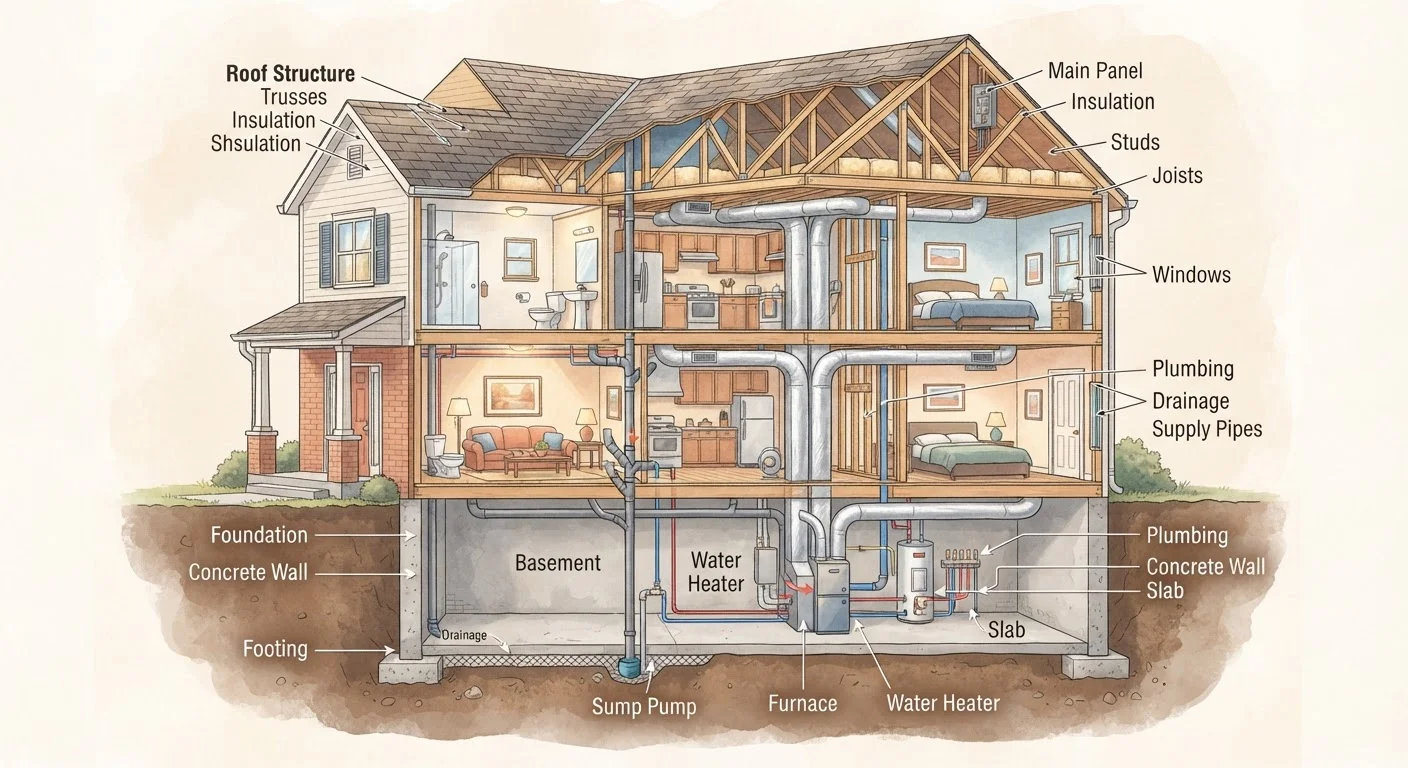
Ask any home inspector or experienced contractor which systems drive the largest repair bills, and you'll hear the same four answers: roof, foundation, HVAC, and plumbing. These aren't cosmetic features - they are the structural and mechanical backbone of your home. When one fails unexpectedly, the costs can reach into the tens of thousands of dollars, and the damage rarely stays contained to one area.
The good news is that all four systems telegraph trouble well before a crisis hits - if you know the signs. This guide gives you a clear mental model of what each system does, how it typically degrades over time, what normal maintenance looks like, and when a licensed professional needs to take over. For a broader picture of what the first stretch of homeownership demands, see our first-year homeowner maintenance guide.
$15,000+
Average emergency roof replacement cost
Industry estimates from roofing trade associations suggest emergency replacements often exceed planned ones by 20-40% due to interior damage.
~47%
Home energy use attributed to heating and cooling
According to the U.S. Department of Energy, HVAC accounts for nearly half of a typical home's total energy consumption.
1-3 months
Recommended HVAC filter replacement interval
HVAC manufacturers and the EPA commonly cite this range, with shorter intervals for homes with pets or allergy sufferers.
Your Roof: What It Does and How It Ages
Your roof does far more than keep rain out. It manages wind loads, sheds snow weight, ventilates attic heat, and protects wall framing from moisture intrusion. Most residential roofs use asphalt shingles, which typically carry a manufacturer lifespan of 20-30 years depending on the grade, climate exposure, and attic ventilation quality.
What to watch for
- Granule loss: Check your gutters after heavy rain. An excess of small asphalt granules signals shingles are nearing end of life.
- Lifted, curled, or missing shingles: These create direct pathways for water infiltration.
- Soft spots on the decking: Sponginess underfoot during an attic inspection indicates moisture-damaged sheathing.
- Flashing failures: Metal flashing seals the joints around chimneys, vents, and skylights. Rust, gaps, or separation are common leak sources.
DIY vs. professional boundary
Clearing debris from gutters and visually inspecting from the ground or a ladder are reasonable homeowner tasks. Replacing shingles, resealing flashing, or assessing structural decking damage should be handled by a licensed roofing contractor. Working at height carries serious fall risk, and improper repairs can void material warranties.
After any significant hailstorm or windstorm, conduct a ground-level inspection with binoculars before calling a contractor - document what you see with photos so you have a baseline for insurance discussions.
Having your own photographic record helps you distinguish pre-existing wear from storm damage and supports more accurate insurance claims.
Install a whole-house water leak detector at your main supply line or water heater. Some insurance carriers offer premium discounts for these devices, and they can alert you to slow leaks long before visible damage appears.
Water damage is one of the most frequently filed homeowner insurance claims; slow, hidden leaks behind walls or under slabs are often more destructive than burst pipes.
Your Foundation: The Silent Load-Bearer
Your foundation transfers the entire weight of your home to the ground beneath it. Most American homes rest on one of three types: a poured concrete slab, a crawl space with perimeter footings, or a full basement. Each type has its own vulnerability profile, but all share one primary enemy: water.
Warning signs worth investigating
- Horizontal or stair-step cracks in masonry: These patterns can indicate lateral soil pressure or settling and warrant professional evaluation.
- Doors and windows that suddenly stick: Minor seasonal movement is normal, but persistent sticking can signal foundation shift.
- Water intrusion in the basement or crawl space: Standing water accelerates concrete deterioration and promotes mold growth.
- Gaps between walls and ceilings or floors: Separations that grow over time - rather than staying stable - deserve a structural engineer's opinion.
Foundation repair is almost always a job for a licensed structural or geotechnical professional. Many repairs also require permits and inspections. Our reference guide on permits, inspections, and licensed trades explains what triggers those requirements.
HVAC: Heating, Cooling, and Air Quality
HVAC systems control your home's temperature, humidity, and air quality year-round. A central forced-air system consists of a furnace or air handler, an air conditioner or heat pump, ductwork, and a thermostat. Each component has a different service life and maintenance rhythm.
Routine tasks homeowners can handle
- Filter replacement: A clogged filter is the single most common cause of HVAC inefficiency and premature failure. Replace every 1-3 months depending on filter type and household conditions.
- Keeping vents unobstructed: Furniture or rugs blocking supply and return vents force the system to work harder.
- Clearing the condensate drain line: A wet/dry vacuum applied to the drain access port removes algae buildup that causes water overflow.
- Outdoor unit clearance: Keep vegetation and debris at least two feet away from the condenser unit.
When to call a technician
Refrigerant handling is federally regulated and requires EPA Section 608 certification - never attempt it yourself. Annual professional tune-ups, electrical inspections, and heat exchanger checks are also technician territory. Furnace heat exchangers that develop cracks can leak carbon monoxide; a licensed HVAC technician should inspect yours annually. For a seasonal maintenance schedule that includes HVAC tasks, see our month-by-month home maintenance breakdown.
Plumbing: Supply, Drain, and Everything Between
Your home's plumbing operates as two separate systems that never mix: supply lines bring pressurized clean water in, and drain-waste-vent (DWV) lines carry wastewater out by gravity. Understanding this distinction helps you diagnose problems faster and communicate clearly with a plumber.
Common homeowner-manageable tasks
- Knowing your main shutoff location: In a burst-pipe emergency, seconds matter. Locate and test your main water shutoff valve annually.
- Checking for slow drains: Sluggish drains signal partial blockages. A drain snake or enzyme-based cleaner handles most clogs before they become full backups. Avoid caustic chemical drain openers, which can damage pipes over time.
- Inspecting under sinks periodically: Look for moisture, staining, or corrosion at supply line connections and P-trap joints.
- Water heater maintenance: Flushing sediment from the tank annually and testing the pressure-relief valve are tasks most homeowners can safely perform after consulting the manufacturer's instructions.
Professional territory
Work involving the main sewer line, gas-connected water heaters, in-wall pipe replacement, or connections to municipal supply lines typically requires permits and a licensed plumber in most jurisdictions. If you're planning a bathroom remodel that involves moving supply or drain lines, our complete bathroom renovation guide covers the plumbing decisions you'll face.
Never Ignore These Plumbing Red Flags
A sudden drop in water pressure throughout the house, sewage odors inside living spaces, or wet spots on walls and ceilings are not minor inconveniences - they can indicate a burst pipe, sewer gas intrusion, or active leak behind finished surfaces. Turn off the main water supply if you suspect a burst pipe, and call a licensed plumber immediately. Sewer gas contains methane and hydrogen sulfide, which are both flammable and potentially toxic.
Maintenance Habits That Pay Off Long-Term
The most effective homeowners treat these four systems like a vehicle's service schedule - predictable, calendar-driven, and non-negotiable. Reactive repairs consistently cost more than preventive ones, and deferred maintenance compounds: a minor roof leak left unaddressed can rot decking, damage insulation, and eventually grow mold in wall cavities.
Build a simple home maintenance log
Record the age of each major system, the last service date, and any known issues. This log becomes invaluable when budgeting for replacements and when disclosing during a future home sale. If you're thinking ahead to renovations, understanding your systems now prevents costly surprises later - our guide to understanding home systems before you renovate is a natural next step.
Rough cost benchmarks to plan around
While costs vary significantly by region and home size, the following general ranges can help you set reserves (costs are approximate and subject to change):
- Roof replacement: Often $8,000-$20,000+ for a typical single-family home
- Foundation crack repair: $500-$15,000+ depending on severity and method
- HVAC system replacement: Roughly $5,000-$12,000 for a complete system
- Water heater replacement: Approximately $800-$2,500 installed
These figures are general benchmarks for planning purposes only - always obtain multiple written estimates from licensed contractors before committing to any major repair. For additional guidance on weatherizing and protecting these systems from seasonal stress, our season-by-season weatherizing guide provides a practical framework.