

Key Takeaways
- Timing weatherization tasks to each season maximizes effectiveness and prevents redundant work.
- Air sealing and caulking are among the highest-impact, lowest-cost energy improvements available to homeowners.
- Gutter maintenance done twice yearly prevents water intrusion, foundation damage, and pest entry.
- HVAC servicing before peak heating and cooling seasons extends equipment life and improves efficiency.
- A documented maintenance routine makes it easier to spot gaps, track warranties, and maintain home value.
Why Seasonal Timing Makes Weatherization More Effective
Weatherizing your home isn't a one-time project - it's an ongoing discipline that works best when specific tasks are matched to the right time of year. Caulk adheres better in moderate temperatures. HVAC technicians are more available in shoulder seasons. Gutter cleaning only makes sense after leaves have fully dropped. Getting the timing right means your effort actually sticks.
This approach also helps homeowners avoid the common trap of reactive spending - scrambling to fix a frozen pipe or a failing air conditioner during peak demand, when both parts and labor cost more. Our home maintenance hub covers the broader landscape of upkeep; this article focuses specifically on the weatherization tasks that protect your home's energy envelope and structural integrity throughout the year.
The good news: most of these tasks require only basic tools, a few hours of time, and materials that cost far less than the damage they prevent. See our companion piece on low-cost tasks that prevent high-cost repairs for more context on the financial case for preventive maintenance.
Fall: Seal, Insulate, and Prepare for Cold
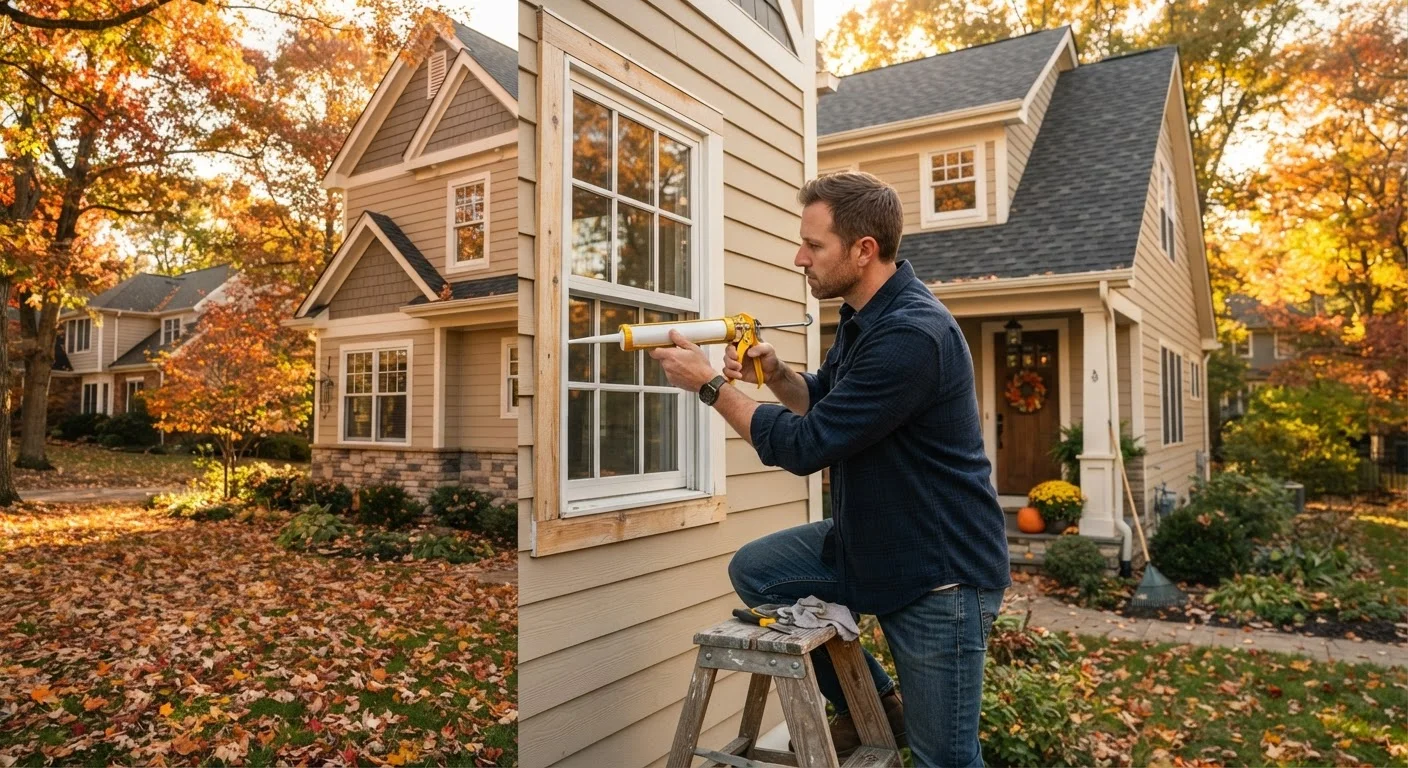
Fall is the most consequential season for weatherization. The window between late September and mid-November - after summer heat has passed but before hard freezes arrive - is ideal for air sealing, caulking, and insulation work. Adhesives and sealants cure properly, and you have time to address any problems before heating loads peak.
Inspect and seal air leaks every fall before heating season begins
Gaps around windows, doors, pipes, and electrical outlets are responsible for a significant share of home energy loss. Sealing them before cold weather arrives directly reduces heating costs and prevents drafts. This work is also more effective when temperatures are mild enough for caulk and weatherstripping adhesives to cure properly.
Clean gutters in late fall after leaves have dropped and again in early spring
Clogged gutters force water to back up under roofing materials, pool near the foundation, or freeze into ice dams during winter. Twice-yearly cleaning addresses the two highest-debris periods and keeps drainage working as designed. Skipping even one season can allow enough material to accumulate that damage begins within a single storm cycle.
Schedule HVAC service in spring for cooling systems and in early fall for heating systems
HVAC technicians are far more available - and often less expensive - during shoulder seasons than during peak demand in July or January. Pre-season service catches refrigerant issues, worn belts, and dirty coils before they cause system failures on the hottest or coldest days of the year.
Replace weatherstripping on exterior doors every two to three years
Weatherstripping degrades from UV exposure, compression, and temperature cycling. Even material that looks intact often no longer seals well enough to prevent conditioned air from escaping. The dollar-cost of replacement is low compared to the ongoing energy penalty of a poorly sealed door.
Check attic ventilation and insulation depth each spring
Attic insulation settles over time, reducing its effective R-value (a measure of thermal resistance). Inadequate ventilation paired with poor insulation creates moisture buildup in winter and radiant heat gain in summer, both of which raise energy costs. Spring is ideal because you can assess winter moisture damage before it progresses.
Test and replace smoke and carbon monoxide detector batteries each season change
Weatherization work often involves sealing gaps near combustion appliances, which can affect airflow and combustion byproduct venting. Functional detectors are the last line of defense if something goes wrong. Using seasonal transitions as a reminder makes it easy to build this into your routine without forgetting.
Gutters deserve special attention in late fall. For a detailed look at what accumulates inside neglected gutters and the cascade of damage it causes, see what actually happens when gutter cleaning gets skipped.
Permits and Professional Work
Some weatherization tasks - particularly adding attic insulation, sealing combustion appliances, or modifying ductwork - may require permits or a licensed contractor in your jurisdiction. Always verify local building codes before beginning any work that touches structural, mechanical, or gas systems. When in doubt, consult a qualified professional.
Also check exterior faucets, hose bibs, and irrigation lines before the first frost. Water left in exposed pipes can freeze and crack them overnight, leading to leaks that may not be discovered until spring thaw.
Spring: Assess Winter Damage and Tune Up Cooling Systems
Spring weatherization is largely about assessment and preparation. After a full heating season, inspect caulk lines around windows and doors for cracks or separation - freeze-thaw cycling works caulk loose over time. Check exterior paint for peeling, which can signal moisture intrusion behind the surface.
This is also the right time to evaluate your attic. Insulation depth, vapor barriers, and ventilation all affect both summer cooling costs and winter heating efficiency. Our article on attic insulation and ventilation explains how these systems interact and what imbalances to watch for. For a broader look at insulation materials and their trade-offs, our insulation comparison guide breaks down R-values and installation complexity by material type.
Schedule air conditioner service in April or May. A technician can check refrigerant charge, clean evaporator and condenser coils, and verify that the system's electrical components are in good shape before the first heat wave. Pair that with a filter change - HVAC filter schedules matter more than most homeowners realize, affecting both air quality and equipment longevity.
Summer and Winter: Maintain, Monitor, and Document
Peak seasons are less about new projects and more about monitoring what you've already done. In summer, check that window AC units are sealed properly around their frames - these are common air leak points that undermine cooling efficiency. In winter, watch for frost forming on interior window surfaces or in attic corners, which signals air sealing or insulation gaps that need attention in spring.
Year-round, keep a maintenance log. Recording what you did, when, and with what materials makes it far easier to plan future work, track warranty periods, and demonstrate care to future buyers. Our article on keeping a home maintenance log explains exactly how this pays off over time. You may also find value in a month-by-month seasonal maintenance breakdown to keep tasks from slipping through the cracks.
“The most cost-effective energy efficiency improvements are almost always the building envelope basics - sealing air leaks and adding insulation where it's lacking. These measures consistently outperform more glamorous upgrades in payback period.”
— Building Science Corporation, Applied building science research and consulting organization
Don't overlook systems that quietly degrade between seasons. Your water heater, for example, benefits from periodic flushing to remove sediment - a task most homeowners defer until the unit fails. Water heater maintenance basics are straightforward and well worth adding to your annual routine. For a clear overview of how your home's major systems age and when to involve a professional, see Roof, Foundation, HVAC, and Plumbing: What Every Homeowner Should Understand.