

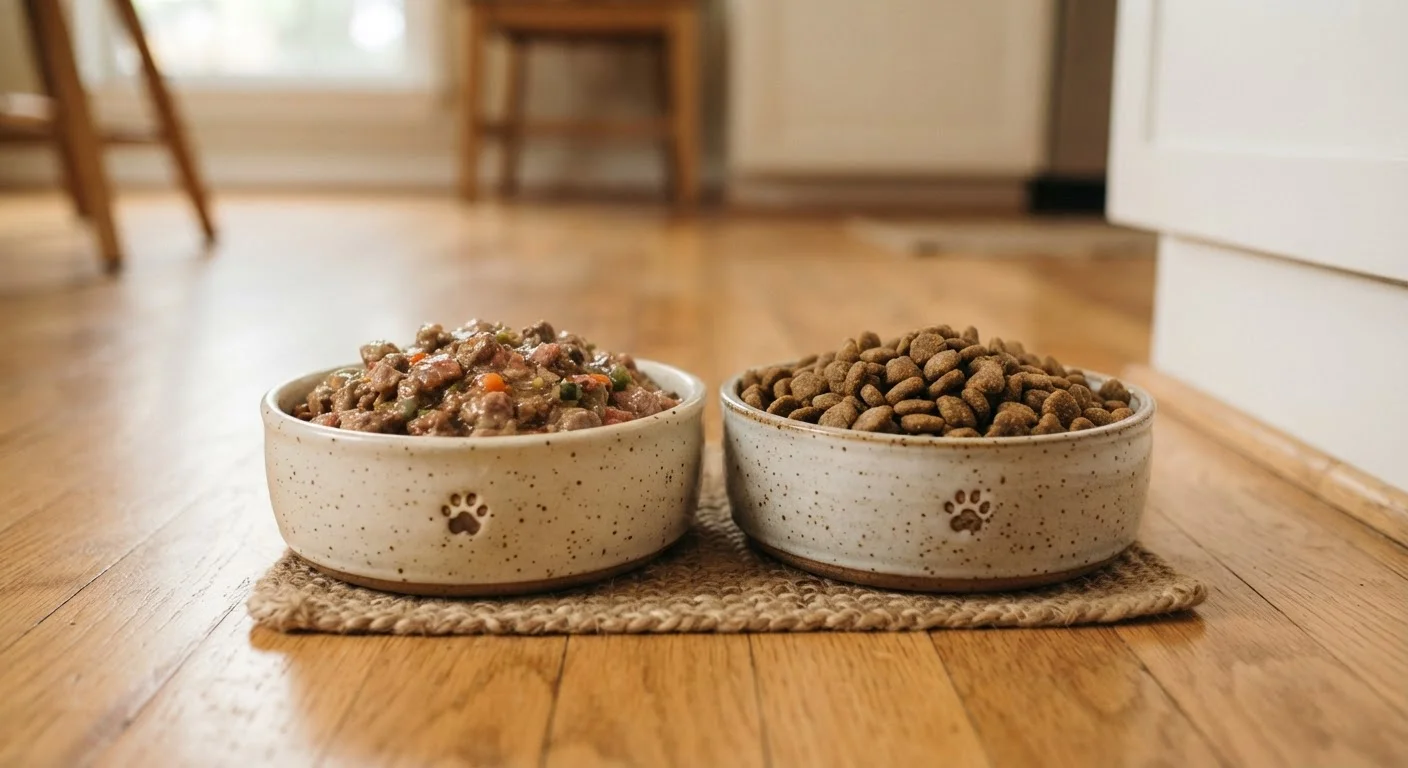
Key Takeaways
- Wet food typically contains 70-80% moisture, supporting hydration in cats and dogs who drink little water.
- Dry kibble is generally less expensive per calorie and stays fresh longer once opened than wet food.
- Neither format is universally superior - a pet's health needs, age, and preferences should guide the choice.
- Dental benefits of dry kibble are real but modest; dedicated dental hygiene is still necessary for both diets.
- Many veterinarians support combining both formats to balance nutrition, palatability, and cost.
Option A
Wet Food (Canned / Pouch)
The moisture-rich, palatable option for hydration and picky eaters.
Best for: Pets that need extra hydration, seniors, those with urinary conditions, or animals with reduced appetite.
Option B
Dry Kibble
The convenient, cost-effective staple for everyday feeding.
Best for: Budget-conscious owners seeking ease of storage, consistent portioning, and general daily nutrition.
If your cat drinks very little water
Wet Food (Canned / Pouch)
Cats naturally have a low thirst drive, and wet food's high moisture content can meaningfully support kidney and urinary tract health.
If you're managing a tight pet-care budget
Dry Kibble
Dry kibble delivers more calories per dollar and has a longer shelf life, making it easier to buy in bulk without waste.
If your pet is a senior or recovering from illness
Wet Food (Canned / Pouch)
Soft texture is easier to chew for older pets or those with dental issues, and added moisture supports overall organ function.
If convenience and storage are top priorities
Dry Kibble
Kibble doesn't require refrigeration after opening and can be left in a measured dispenser for free-choice or timed feeding setups.
If you want to balance palatability and cost
Wet Food (Canned / Pouch)
Even a small amount of wet food mixed into kibble can increase meal appeal for picky eaters without dramatically raising overall costs.
The Core Difference: Water Content and What It Means
The most significant structural difference between wet food and dry kibble is moisture. Canned or pouched wet food typically contains 70-80% water by weight, while dry kibble sits at roughly 10% moisture or less. That gap isn't just about texture - it shapes how your pet absorbs nutrients, stays hydrated, and processes each meal.
For cats especially, this matters. Cats evolved as desert animals with a naturally low thirst drive, meaning they often don't drink enough from a bowl alone. Feeding wet food provides a meaningful portion of their daily fluid intake, which can support kidney function and reduce the risk of lower urinary tract issues over time. Dogs tend to drink more readily, but pets with certain health conditions - including kidney disease or a history of bladder stones - may also benefit from the added moisture.
Dry kibble, by contrast, is calorie-dense. Ounce for ounce, it delivers more energy than wet food, which means smaller serving sizes and typically lower cost per meal. If you're comparing labels, check the calories per cup or can (listed as kcal/kg or kcal per unit) rather than just the price on the shelf. For guidance on reading those figures accurately, see our guide to pet food label basics.
| Criterion | Wet Food | Dry Kibble |
|---|---|---|
| Moisture content | 70-80% | ~10% |
| Calorie density | Lower per ounce | Higher per ounce |
| Typical cost per calorie | Higher | Lower |
| Shelf life (opened) | 2 days refrigerated | Weeks in sealed container |
| Dental benefit | Minimal | Modest (not a substitute for hygiene) |
| Palatability | Generally higher | Varies by pet |
| Hydration support | Strong | Minimal |
| Feeding convenience | Moderate | High |
Dental Health, Digestion, and Palatability
One persistent claim is that dry kibble cleans teeth. There's a kernel of truth here, but it's easy to overstate. The mechanical action of chewing crunchy kibble can slow plaque buildup compared to a diet of only soft food - but most kibble pieces shatter before making meaningful contact with the gumline where plaque accumulates. Only specially formulated dental diets (larger, fiber-matrix kibbles) have demonstrated notable plaque-reduction in clinical studies.
In short: kibble alone is not a substitute for dental hygiene. Whether your pet eats wet, dry, or a mix, regular brushing or veterinarian-approved dental care remains important. Learn more about what actually prevents dental disease in our overview of pet dental health and our deeper look at how dental disease develops in pets.
On palatability, wet food wins for most animals - the aroma and texture are more appealing, especially to cats, seniors, or pets recovering from illness. If your pet is a reluctant eater, mixing a small spoonful of wet food into kibble can increase meal acceptance without a major cost increase. This kind of balanced approach is also relevant when considering how treats and meal feeding interact across the day.
70-80%
Moisture in typical wet pet food
Compared to roughly 10% in dry kibble, according to general AAFCO compositional guidelines and veterinary nutrition references.
~70%
Cats affected by dental disease by age 3
Veterinary dental health organizations estimate the majority of cats and dogs show signs of periodontal disease by their third year, regardless of food type.
3-4×
Cost difference per calorie, wet vs. dry
Rough industry-referenced estimates suggest wet food can cost several times more per calorie than equivalent dry kibble, though this varies by brand tier.
Cost, Storage, and Practical Feeding
Budget is a real factor for most households. Dry kibble is generally more cost-effective: a pound of kibble provides more calories than a pound of wet food, and a bag can be stored at room temperature for weeks after opening (in a sealed container). Wet food, once opened, must be refrigerated and used within two days, which can create waste if your pet doesn't finish each can.
That said, wet food bought in smaller pouches can reduce waste for single-pet households, and the higher moisture content means pets may eat less volume overall. Running an actual per-calorie cost comparison for the specific foods you're considering is more informative than comparing package prices alone.
For households managing multiple pets or tight budgets, a mixed feeding approach - wet food in the morning and kibble in the evening, for example - can be a practical middle ground. It combines the hydration and palatability benefits of wet food with the convenience and economy of kibble. Whatever approach you choose, make sure the total daily intake aligns with your pet's weight, age, and activity level. If you're uncertain whether a label's feeding guidelines make sense for your animal, our article on decoding pet nutrition labels can help you cross-check the numbers.
This article is for general informational purposes only and is not a substitute for professional veterinary advice. Always consult your veterinarian before making significant changes to your pet's diet, especially if your pet has a health condition.