

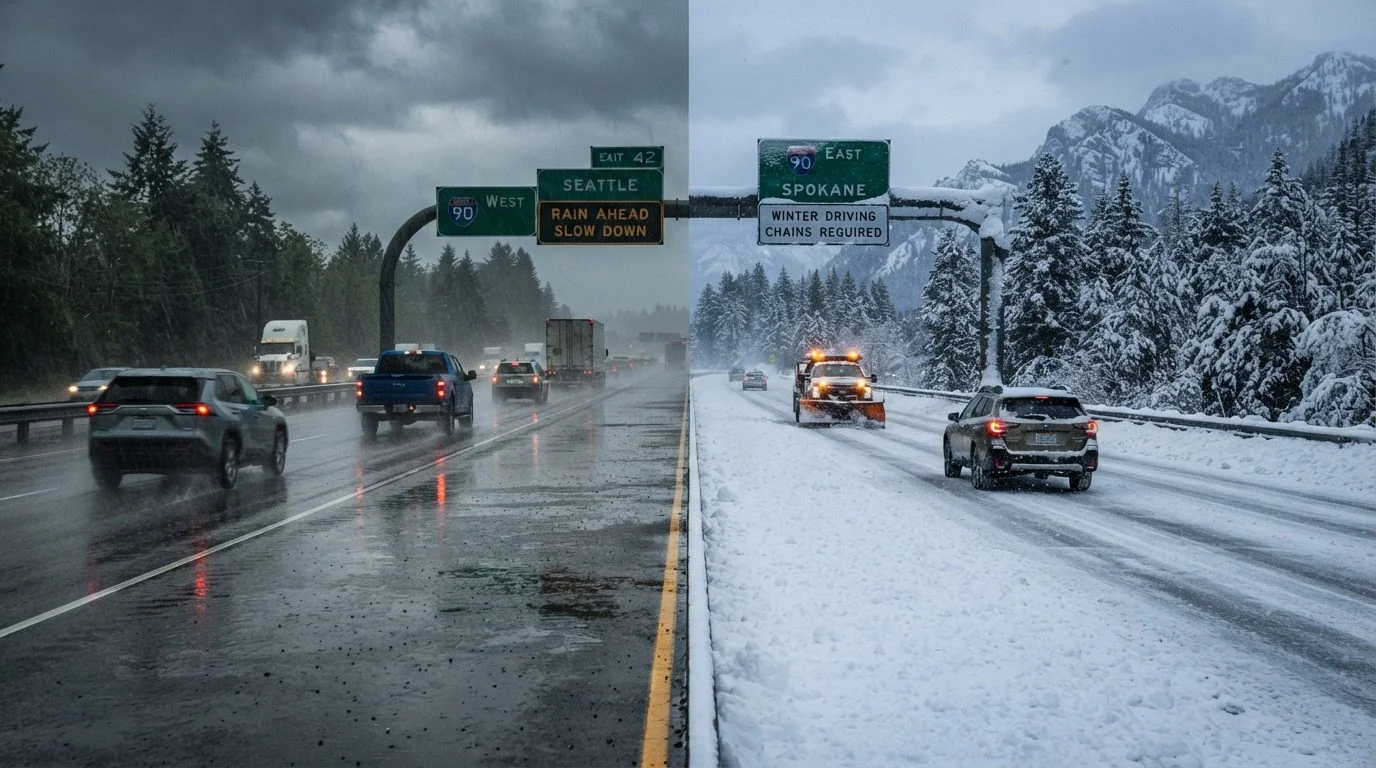
Key Takeaways
- Rain creates hydroplaning risk at highway speeds; snow compresses and becomes slippery at all speeds.
- Braking distances are significantly longer in snow than in rain - adjust following distance accordingly.
- Smooth, gradual inputs for steering, braking, and acceleration apply to both conditions.
- Visibility management differs: rain calls for wipers and headlights; snow adds the challenge of blowing accumulation.
- Tire type matters - winter tires outperform all-seasons in snow, though both need adequate tread depth for wet roads.
Our Verdict
Rain and snow both reduce traction, but snow generally demands greater caution due to longer stopping distances, compacted ice risks, and more unpredictable surface changes. Rain's primary danger - hydroplaning - can be managed with speed and tire maintenance. Snow requires a comprehensive adjustment to speed, following distance, and steering inputs.
| Best for | Recommended |
|---|---|
| Drivers in regions with frequent heavy rain | Rain-specific technique adjustments |
| Drivers in cold climates with regular snowfall | Snow-specific technique and winter tire preparation |
Why Rain and Snow Are Not the Same Safety Problem
At a glance, rain and snow share the same basic threat: reduced traction between your tires and the road. But the physics underneath those two conditions are meaningfully different, and treating them as interchangeable can leave you unprepared at the worst moment.
Rain creates a thin water film that your tires must channel away to maintain grip. When tread can't move water fast enough - especially at higher speeds - the tire rides on a wedge of water rather than the pavement. That's hydroplaning, and it can cause sudden, complete loss of steering control.
Snow, particularly packed snow or slush, behaves differently. It compresses underfoot and can become as slick as ice. Unlike rain, snow can obscure lane markings, change road geometry, and pile up on your vehicle to block visibility. For a broader look at how different surfaces affect traction, see our guide on adapting to hazardous driving surfaces.
Driving in Rain: Speed, Tread, and Hydroplaning
The most important variable in wet-weather driving is speed. Hydroplaning typically begins around 35 mph on standing water - the faster you go, the less time your tires have to channel water away. Slowing down is the single most effective countermeasure.
Key Adjustments for Rain
- Increase following distance to at least four seconds. Wet pavement can add 50% or more to your stopping distance compared to dry conditions.
- Use headlights even during daylight rain - it improves your visibility to other drivers.
- Avoid standing water when possible, particularly in the outer lanes where water pools.
- Do not brake sharply if you feel hydroplaning. Ease off the accelerator smoothly and hold the steering wheel straight until grip returns.
Tire condition is critical in rain. Worn tread - legally borderline at 2/32 of an inch - evacuates far less water than tires with healthy tread depth. If you want to understand what your tire wear is telling you, reading your tire wear patterns is a useful starting point.
Check Your Wiper Blades Before Rain Season
Worn or streaking wiper blades dramatically reduce visibility in heavy rain. Wiper blades typically need replacement every six to twelve months. If your blades skip, smear, or leave large unwiped arcs, replace them before conditions worsen. This is one of the lowest-cost, highest-impact maintenance steps for wet-weather safety.
Driving in Snow: Stopping Distance and Smooth Inputs
Snow introduces stopping distances that can be two to ten times longer than dry pavement, depending on snow depth, temperature, and whether the surface has compacted into ice. That alone requires a fundamentally different approach to following distance and speed selection.
Key Adjustments for Snow
- Double your following distance at minimum - some safety experts recommend eight to ten seconds in heavy snow or slush.
- Accelerate slowly to avoid wheel spin. If your wheels spin freely, you're not moving forward - you're just generating heat.
- Brake gently and early. Modern vehicles with ABS (anti-lock braking system) will pulse the brakes automatically, but you still need adequate time and space.
- Steer smoothly. Abrupt steering inputs on packed snow can break traction and send you into a skid.
- Clear all snow from your vehicle before driving - roof accumulation can slide onto your windshield or into other drivers' paths.
Tire choice matters significantly in snow. Standard all-season tires lose flexibility below about 45°F, reducing grip. Winter tires vs. all-season tires explains the engineering differences and when the upgrade is worth considering.
Side-by-Side: How the Two Conditions Compare
Understanding where rain and snow diverge helps you build the right habits for each. The table below summarizes the main differences in risk profile and driver response.
| Factor | Driving in Rain | Driving in Snow | |
|---|---|---|---|
| Primary traction risk | Hydroplaning on water film | Sliding on compacted snow or ice | |
| Recommended following distance | At least 4 seconds | 8-10 seconds in heavy snow | |
| Speed strategy | Reduce speed to avoid hydroplaning | Drive well below posted limit | |
| Braking technique | Ease off smoothly; avoid sharp stops | Brake gently and very early | |
| Visibility challenges | Reduced by rain; use wipers and lights | Snow accumulation, glare, blowing snow | |
| Tire consideration | Tread depth is critical | Winter tires strongly advisable in cold climates | |
| Vehicle prep needed | Check wipers and tire tread | Clear all snow; check antifreeze and battery |
Both conditions reward the same foundational habit: anticipating hazards before they arrive. That's the core of defensive driving - slowing down mentally before you slow down physically.
This article is for general informational purposes. Always follow local traffic laws and adjust your driving to your vehicle's capabilities, road conditions, and your own experience level.