

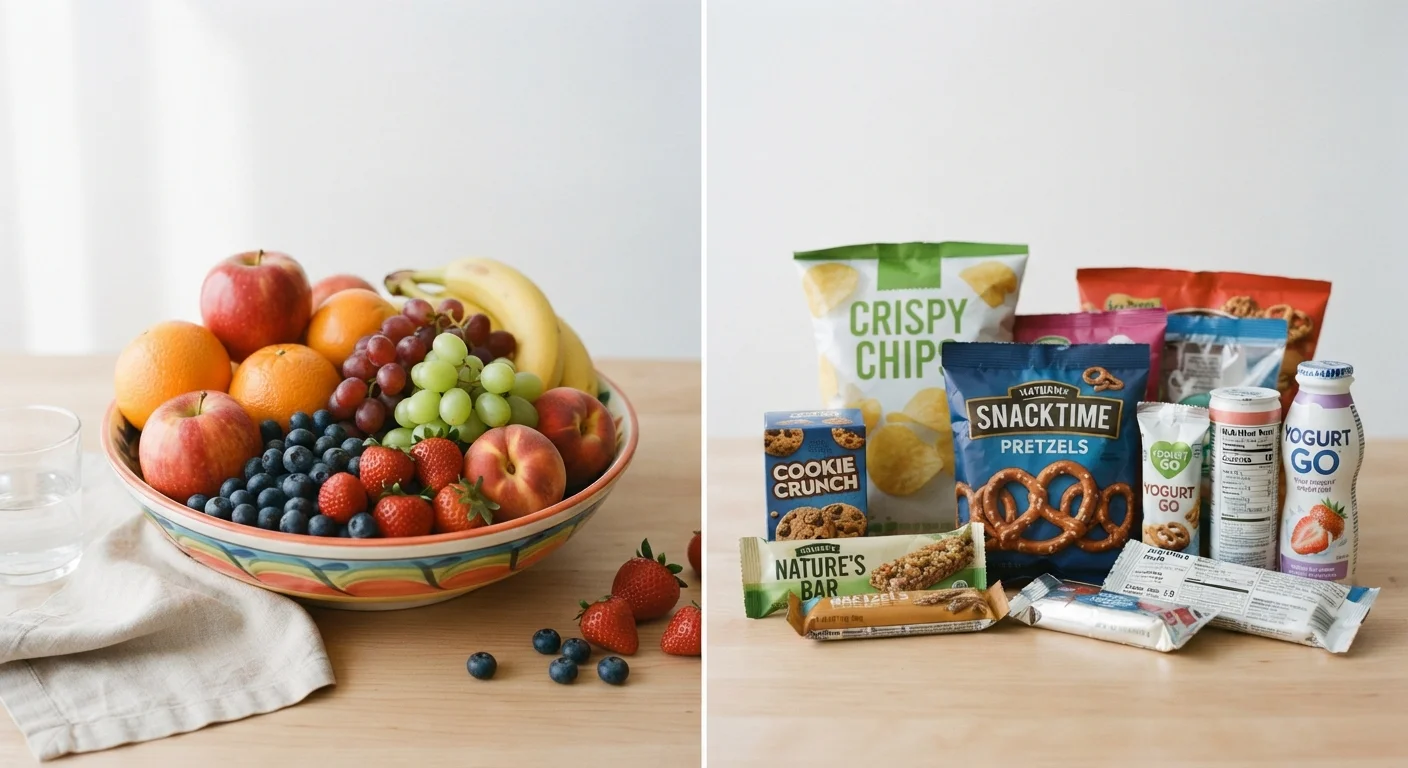
Key Takeaways
- Natural sugars come packaged with fiber, vitamins, and minerals that slow absorption and provide nutritional value.
- Added sugars are incorporated during food manufacturing or preparation and carry no additional nutrients.
- The FDA now requires added sugars to be listed separately on Nutrition Facts labels.
- Excess added sugar intake is linked to increased risk of cardiovascular disease, obesity, and type 2 diabetes.
- Whole fruits and dairy foods contain natural sugars but are not treated the same as sweetened products by health guidelines.
- Most Americans exceed the daily recommended limit for added sugar without realizing it.
Option A
Natural Sugar
The sugar that comes bundled with nutrients.
Best for: People looking to satisfy sweetness cravings while still getting fiber, vitamins, and minerals from whole foods.
Option B
Added Sugar
The sugar introduced during processing or preparation.
Best for: Understanding what to monitor on nutrition labels and where hidden sugar commonly accumulates in everyday diets.
If you're trying to reduce overall sugar intake
Natural Sugar
Prioritizing whole foods with natural sugars - like fruit and plain dairy - means you're also getting fiber and micronutrients, which blunt blood sugar spikes and support satiety.
If you're reading labels to improve your diet
Added Sugar
Tracking added sugars on the Nutrition Facts panel is the most actionable step for cutting back, since this is where most excess sugar in American diets accumulates.
If you manage blood sugar or metabolic health
Natural Sugar
Natural sugars in whole foods come with fiber that moderates glucose response; however, individual needs vary - consult a healthcare provider or registered dietitian for personalized guidance.
What Makes These Two Sugars Different
At the molecular level, a glucose molecule from a grape and a glucose molecule from a soft drink are chemically identical. So why do nutrition scientists, public health agencies, and food labels treat them so differently? The answer lies not in the sugar molecule itself, but in what surrounds it.
Natural sugars are found inherently in whole foods - fructose in fruit, lactose in milk, and small amounts of various sugars in vegetables. These foods deliver their sweetness alongside fiber, water, vitamins, and minerals. The fiber in a whole apple, for instance, slows digestion and the rate at which sugar enters the bloodstream. See our guide to dietary fiber for a deeper look at how this buffering effect works.
Added sugars, by contrast, are any sugars or caloric sweeteners introduced to a food during processing or preparation - including white sugar, high-fructose corn syrup, honey, agave nectar, and fruit juice concentrate used as an ingredient. They provide calories without accompanying nutrients, which is why researchers and dietitians often call them "empty calories."
| Criterion | Natural Sugar | Added Sugar |
|---|---|---|
| Source | Inherent in whole foods (fruit, dairy, vegetables) | Added during processing or preparation |
| Nutrient package | Comes with fiber, vitamins, minerals | Provides calories only - no additional nutrients |
| Blood sugar impact | Generally slower absorption due to fiber | Often absorbed more rapidly |
| Label disclosure | Included in "Total Sugars" only | Listed separately as "Added Sugars" on FDA labels |
| Health guideline focus | Not a target for reduction in whole-food form | Primary target for reduction in dietary guidelines |
| Common examples | Fructose in apples, lactose in milk | Corn syrup in soda, cane sugar in cookies |
How the Body Responds - and Why Context Matters
Because natural sugars in whole foods are absorbed more gradually, they tend to produce a more modest blood glucose response compared with equivalent amounts of isolated or added sugars. The glycemic index captures part of this picture, though it has real limitations when applied to mixed meals or whole diets.
Added sugars, consumed in large amounts over time, have been associated in research with increased risk of cardiovascular disease, weight gain, insulin resistance, and dental decay. The American Heart Association generally recommends limiting added sugar to no more than 25 grams per day for women and 36 grams per day for men - amounts that many Americans regularly exceed without awareness.
17 tsp
Average daily added sugar intake for U.S. adults
According to CDC data, U.S. adults consume roughly 17 teaspoons of added sugar per day - well above the American Heart Association's recommended limits.
13%
Share of daily calories from added sugar
NHANES data indicates that added sugars account for about 13% of total calorie intake in American adults, with sweetened beverages as the top contributor.
36g
AHA daily added sugar limit for men
The American Heart Association recommends men consume no more than 36 grams (about 9 teaspoons) of added sugar per day for cardiovascular health.
It's worth noting that context matters even within natural sugars. Blending fruit into a smoothie breaks down fiber structure, which can accelerate sugar absorption compared to eating the same fruit whole. Fruit juice - even 100% juice - behaves more like a sweetened beverage than a whole piece of fruit for this reason.
This article is for general informational purposes only and is not a substitute for personalized medical or nutritional advice. Consult a qualified healthcare professional or registered dietitian before making significant changes to your diet.
Reading Labels: Where Added Sugar Hides
Since 2020, updated FDA rules require U.S. Nutrition Facts labels to list added sugars as a separate line item beneath total sugars. This is a practical tool for consumers. Our guide to reading nutrition labels explains exactly what each section of the panel means and how to use it efficiently.
Added sugars appear under dozens of names in ingredient lists, including:
- High-fructose corn syrup
- Cane sugar or cane juice
- Dextrose, maltose, or sucrose
- Maple syrup, honey, or agave
- Fruit juice concentrate
- Molasses or brown rice syrup
Foods that frequently carry more added sugar than consumers expect include flavored yogurt, breakfast cereals, bottled salad dressings, pasta sauces, granola bars, and flavored oatmeal packets. Checking the "Added Sugars" line - rather than only the total sugar figure - gives you a more accurate picture of a product's nutritional profile. This same critical reading habit applies when assessing other nutrients; for comparison, see how processing affects grain nutrition.