

Key Takeaways
- The glycemic index ranks carbohydrates by how quickly they raise blood sugar on a scale of 0-100.
- GI values are measured in isolation, so real-world meals behave very differently than the chart suggests.
- Portion size, food combinations, ripeness, and cooking method all alter a food's blood sugar impact.
- The glycemic index is a useful starting point, not a complete guide to healthy eating.
- People with diabetes or prediabetes should work with a healthcare provider rather than relying on GI alone.
Grounded in measurable, repeatable research
GI values are determined through controlled human trials, giving them more scientific credibility than many popular diet concepts. Decades of research have linked lower-GI diets to improved blood glucose control in people with type 2 diabetes.
Encourages focus on carbohydrate quality
Rather than demonizing all carbohydrates equally, the GI distinguishes fast-digesting from slow-digesting options, nudging eaters toward whole grains, legumes, and vegetables over refined starches.
Useful framework for blood sugar management
For people with insulin resistance or diabetes, GI and GL data provide structured language for conversations with dietitians and can support more consistent glucose control alongside medical treatment.
Easy to apply as a general heuristic
Without memorizing specific numbers, the broad pattern - less processing usually means lower GI - translates into practical everyday choices at the grocery store or while cooking.
Tested in isolation, eaten in combinations
GI scores are measured for single foods eaten alone, but nearly every real meal involves fat, protein, and fiber that alter blood sugar responses significantly. The number on a GI chart may bear little resemblance to how that food behaves in a mixed meal.
Ignores portion size entirely
A low-GI food eaten in large quantities can still cause a substantial blood sugar rise, while a high-GI food eaten in a small portion may have minimal effect. GI alone provides no portion guidance.
Individual responses vary considerably
Research, including large-scale studies examining personalized nutrition, has found that blood glucose responses to the same food differ widely between individuals based on gut microbiome, genetics, and metabolic health.
Ripeness and cooking alter values unpredictably
The GI of a banana, pasta, or potato can shift substantially depending on how ripe it is or how long it's cooked, making static published values an approximation at best.
Does not reflect overall nutritional quality
Some low-GI foods (such as certain ultra-processed snacks engineered with fat and protein) score well on GI but are nutritionally poor. High-GI foods like watermelon and carrots are nutrient-dense despite their scores.
Our Verdict
The glycemic index offers a genuinely useful lens for understanding how different carbohydrates affect blood sugar, and it has meaningful research backing for people managing blood glucose or diabetes risk. However, its real-world predictive power is limited by the many variables it cannot account for - meal composition, portion size, and individual biology chief among them. Treated as one tool among several, rather than a dietary rulebook, it can inform smarter food choices without creating unnecessary restriction.
Best for people who want a research-grounded framework for understanding carbohydrate quality, particularly those working with a healthcare provider to manage blood sugar levels.
What the Glycemic Index Actually Measures
The glycemic index (GI) is a numerical ranking system that describes how quickly a carbohydrate-containing food raises blood glucose levels compared with pure glucose, which is assigned a score of 100. Foods scoring 55 or below are considered low GI, 56-69 medium, and 70 or above high GI.
The measurement process is more specific than many people realize. Test subjects eat a portion of a food containing exactly 50 grams of digestible carbohydrate, then researchers track blood glucose responses over two hours. That average response is compared against the same person's response to 50 grams of pure glucose. The result is a single number that represents glycemic speed - but not much else.
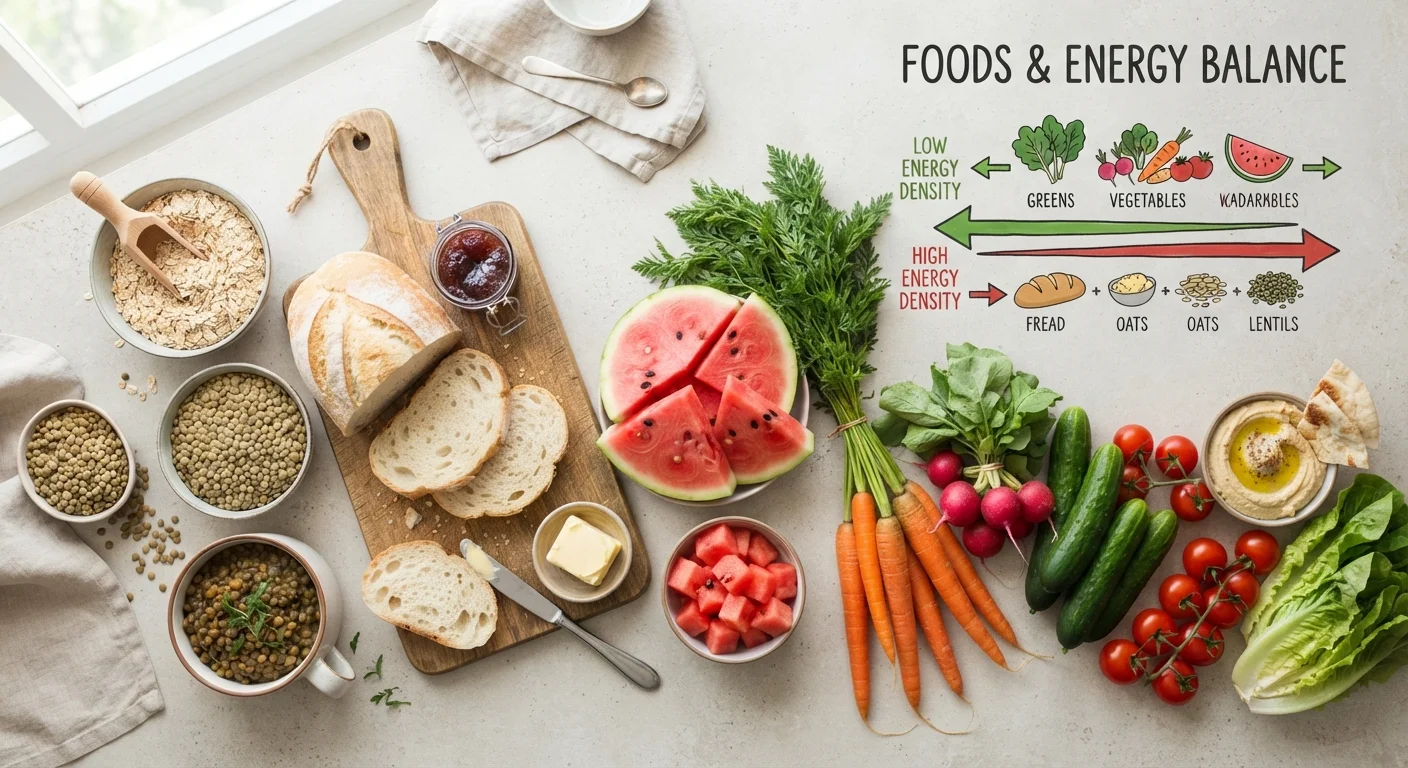
Common low-GI foods include lentils, most non-starchy vegetables, and plain yogurt. High-GI foods include white bread, short-grain white rice, and many breakfast cereals. Watermelon, often cited as an example of counterintuitive GI data, scores around 72 - yet a typical serving contains so few total carbohydrates that its real-world blood sugar impact is modest.
GI Is Not the Same as 'Unhealthy'
A high GI score does not automatically make a food a poor choice, nor does a low GI score make a food nutritious. Carrots, parsnips, and watermelon all score relatively high on the GI scale, yet they are nutrient-dense whole foods. Context - serving size, meal composition, and overall diet pattern - matters far more than any single number.
Where the Glycemic Index Falls Short
The GI's limitations begin with how it's tested. Laboratory measurements use foods eaten alone and in a fixed carbohydrate quantity - conditions that rarely reflect how Americans actually eat. Adding fat, protein, or fiber to a meal slows gastric emptying and significantly blunts the glycemic response of any carbohydrate in that meal. A baked potato eaten plain has a high GI; the same potato eaten with cottage cheese and a side salad produces a meaningfully different blood sugar curve.
Tested in isolation, eaten in combinations
GI scores are measured for single foods eaten alone, but nearly every real meal involves fat, protein, and fiber that alter blood sugar responses significantly. The number on a GI chart may bear little resemblance to how that food behaves in a mixed meal.
Ignores portion size entirely
A low-GI food eaten in large quantities can still cause a substantial blood sugar rise, while a high-GI food eaten in a small portion may have minimal effect. GI alone provides no portion guidance.
Individual responses vary considerably
Research, including large-scale studies examining personalized nutrition, has found that blood glucose responses to the same food differ widely between individuals based on gut microbiome, genetics, and metabolic health.
Ripeness and cooking alter values unpredictably
The GI of a banana, pasta, or potato can shift substantially depending on how ripe it is or how long it's cooked, making static published values an approximation at best.
Does not reflect overall nutritional quality
Some low-GI foods (such as certain ultra-processed snacks engineered with fat and protein) score well on GI but are nutritionally poor. High-GI foods like watermelon and carrots are nutrient-dense despite their scores.
Individual variation is another underappreciated factor. Research has demonstrated that two people eating identical meals can experience dramatically different blood glucose responses, influenced by gut microbiome composition, insulin sensitivity, stress levels, and even sleep quality. This means a GI number assigned to a food may predict your personal response only loosely.
Ripeness and cooking method also shift GI values substantially. A firm, underripe banana has a GI around 30-40; a very ripe banana can exceed 60. Al dente pasta has a lower GI than the same pasta cooked until soft, because heat and moisture break down starch structures that would otherwise digest more slowly.
The Glycemic Load: A More Practical Companion
Nutritionists who work with GI data often prefer a related measure called glycemic load (GL), which factors in both a food's GI score and the amount of carbohydrate in a realistic serving. The formula is straightforward: GL = (GI × grams of carbohydrate per serving) ÷ 100.
This is where the watermelon example resolves neatly. Despite its high GI of around 72, a standard two-cup serving contains only about 11 grams of net carbohydrate, producing a GL of roughly 8 - firmly in the low range. Glycemic load gives a more honest picture of how a food will actually behave on your plate. For context, a GL under 10 is considered low, 11-19 medium, and 20 or above high.
55 or below
Low GI threshold for a food
The scale, established through research at the University of Sydney, classifies foods as low (≤55), medium (56-69), or high (≥70) based on blood glucose response curves.
~20%
Variation in GI across individuals
Research published in Cell (2015) found that people's blood glucose responses to identical foods varied by roughly 20% or more, highlighting the limits of population-average GI values.
Understanding GL alongside GI can help readers get more value from reading a nutrition label, since carbohydrate quantities listed on food packaging feed directly into the GL calculation.
How to Use GI Sensibly - Without Overcomplicating Eating
The glycemic index works best as a general guide to carbohydrate quality rather than a rigid ranking system to memorize. A few practical principles capture most of its value without requiring constant calculation.
Grounded in measurable, repeatable research
GI values are determined through controlled human trials, giving them more scientific credibility than many popular diet concepts. Decades of research have linked lower-GI diets to improved blood glucose control in people with type 2 diabetes.
Encourages focus on carbohydrate quality
Rather than demonizing all carbohydrates equally, the GI distinguishes fast-digesting from slow-digesting options, nudging eaters toward whole grains, legumes, and vegetables over refined starches.
Useful framework for blood sugar management
For people with insulin resistance or diabetes, GI and GL data provide structured language for conversations with dietitians and can support more consistent glucose control alongside medical treatment.
Easy to apply as a general heuristic
Without memorizing specific numbers, the broad pattern - less processing usually means lower GI - translates into practical everyday choices at the grocery store or while cooking.
Prioritizing minimally processed carbohydrates - whole grains, legumes, most fruits and vegetables - tends to mean lower GI choices by default, while also delivering more dietary fiber, vitamins, and minerals. Pairing carbohydrates with lean protein, healthy fat, or non-starchy vegetables is a straightforward way to moderate blood sugar impact without tracking numbers. And building a balanced plate naturally creates the mixed-meal conditions that blunt high-GI foods' effects anyway.
It's also worth separating GI from added sugar conversations. A food can be low-GI and still be high in added sugars - and vice versa. The glycemic index measures blood glucose speed, not nutritional quality overall.
People managing diabetes, prediabetes, or other conditions affecting blood sugar should treat GI as one data point to discuss with their healthcare provider or registered dietitian, not a standalone management strategy.
This article is for general informational and educational purposes only and is not medical or dietary advice. Always consult a qualified healthcare professional before making changes to your diet, particularly if you have a medical condition.